
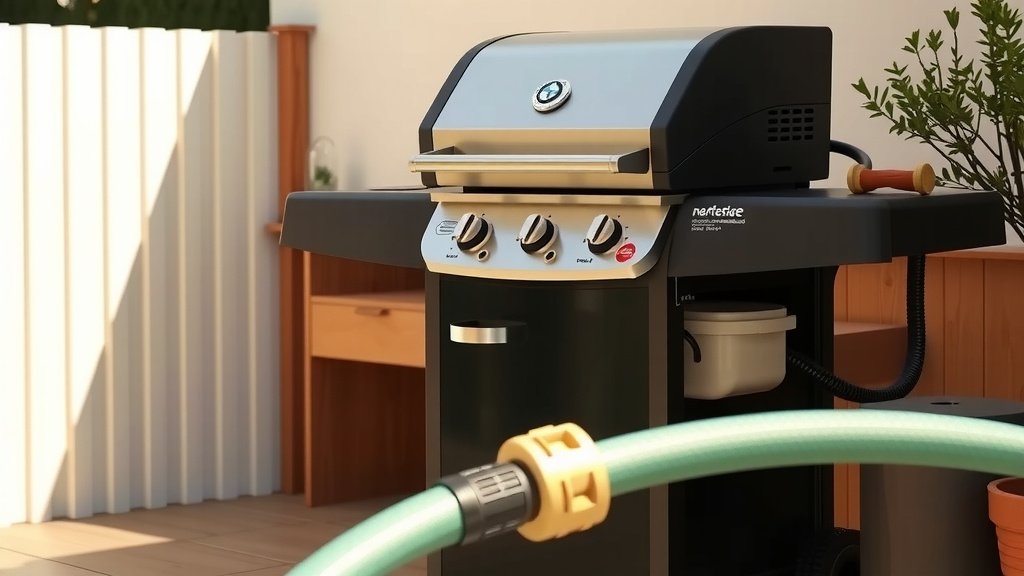
No, you generally should not hose down a propane grill directly with water. Doing so can cause significant damage to sensitive components and create safety hazards.
Water can lead to rust on metal parts, short-circuit electrical igniters, and mix with grease to form a hard-to-remove, potentially flammable sludge.
- Hosing down your propane grill is a bad idea due to rust and electrical damage.
- Water can turn grease into a sticky, flammable mess that’s tough to clean.
- Always disconnect the propane tank before any cleaning.
- Use specific cleaning methods like scraping, brushing, and wiping with warm, soapy water for best results.
- Prevention is easier: clean your grill regularly after each use to avoid heavy buildup.
Can You Hose Down A Propane Grill?
You absolutely should not hose down a propane grill. We found that exposing internal components to large amounts of water can cause lasting issues.
This action might seem like a quick cleaning fix, but it often creates bigger problems for your grilling experience.
Why Hosing Down Your Grill is a Bad Idea
Imagine your grill as a car engine. You wouldn’t spray it with a hose, right? The same logic applies here.
Propane grills have many parts that don’t mix well with excessive moisture. This includes metal, electrical systems, and even the fuel lines.
The Rust Problem
Most propane grills are made from various metals, including steel and cast iron. These materials are susceptible to rust when wet.
Research often shows that persistent dampness quickly leads to corrosion, shortening the lifespan of your grill (Manufacturer Guidelines).
Electrical Component Damage
Your grill likely has an igniter button that sparks to light the burners. This system is electrical.
Spraying water directly on it can cause a short circuit, making your igniter useless. You’d then need matches or a lighter, which is less convenient.
Grease and Water Don’t Mix Well
Think about oil and water in a salad dressing. They don’t combine easily. On your grill, grease is very sticky.
When you add water, it doesn’t wash away; it can dilute the grease and create a messy, sludgy film that is incredibly hard to remove later.
Safety Hazards to Watch Out For
Beyond damage, hosing down your grill also brings some safety risks. Your grill works with propane, a flammable gas.
Keeping safety in mind is always a priority when dealing with gas appliances. You want to avoid any potential issues.
Fire Risk from Sludge
That grease-water mixture we talked about? It can become a dangerous buildup.
If this gunk collects in drain holes or around burners, it can ignite during future cooking sessions. This leads to unexpected flare-ups.
Compromised Gas Connections
While less common, extreme hosing could potentially affect the integrity of gas lines or connections.
Any moisture inside these areas could cause issues, though proper seals often prevent this. It’s a risk not worth taking.
The Right Way to Clean Your Propane Grill
Cleaning your grill correctly extends its life and keeps your food tasting great. It’s not a difficult process, just a specific one.
Many grilling experts advise a systematic approach rather than a quick hose-down (UL Safety Standards).
Preparing for a Deep Clean
Before you do anything, ensure your grill is completely cool. This prevents burns.
Next, and this is extremely important, disconnect the propane tank from the grill. Safety always comes first.
Burn Off Residue First
A smart first step is to turn your grill to high heat for about 10-15 minutes after cooking. This burns off food bits.
After it cools, many of the remaining particles will be easier to brush away.
Step-by-Step Cleaning Process
Here’s a simple checklist to follow for a sparkling clean grill:
- Disconnect the propane tank.
- Remove grates and flavorizer bars.
- Scrape grates with a wire brush or specialized grill scraper.
- Wash grates with warm, soapy water and rinse them thoroughly.
- Clean flavorizer bars with a scraper or brush.
- Wipe down the inside of the cook box with a damp cloth.
- Clean the grease tray and catch pan.
- Reassemble all parts.
Cleaning Grill Grates
Once your grates are cool, remove them. You can soak them in warm, soapy water in a utility sink or large tub.
Use a stiff brush or a specialized grill scrubber to get rid of baked-on food and grease. Rinse them completely afterwards.
Handling Flavorizer Bars and Burner Tubes
These parts sit above your burners. They catch drippings and help distribute heat.
Brush them off with a stiff brush. Check burner tubes for any blockages and clear them gently with a small wire.
Wiping Down the Interior
Use a damp cloth, perhaps with a little mild dish soap, to wipe down the inside of the grill lid and cook box.
Avoid letting water pool in the bottom. Dry everything well with a clean, dry rag.
Don’t Forget the Grease Management System
The grease tray and catch pan are there for a reason. They collect fats and oils.
Empty and clean these regularly with soap and water. This prevents future fires and keeps pests away.
| Cleaning Method | Pros | Cons |
|---|---|---|
| Hosing Down (Not Recommended) | Seems quick | Rust, electrical damage, dangerous grease sludge, fire risk |
| Manual Cleaning (Recommended) | Safe, thorough, extends grill life, improves food taste | Requires more time and effort |
Can You Wash Grill Parts in the Dishwasher?
For most grill grates and flavorizer bars, the answer is no. Dishwashers can be too harsh.
The high heat and strong detergents can strip coatings, cause rusting, or warp parts. It’s better to hand wash.
What About Stainless Steel Grills?
While stainless steel resists rust better than other metals, it’s not immune. Water can still get into seams and crevices.
Also, stainless steel can stain or discolor if not dried properly, leaving unsightly water spots.
Regular Maintenance Tips
A little care goes a long way. After every use, turn up the heat for 10 minutes to burn off food.
Then, once the grill cools, give the grates a quick brush. This daily habit reduces the need for deep cleaning.
Conclusion
Resist the urge to hose down your propane grill. While it seems like an easy solution, the potential for damage, rust, and safety hazards far outweighs any perceived convenience.
Instead, embrace the tried-and-true methods of manual cleaning with brushes, soap, and water. A little regular care will keep your grill in top shape, ensuring many safe and delicious backyard cookouts for years to come.
Can I use a pressure washer on my propane grill?
Using a pressure washer on your propane grill is even worse than hosing it down. The intense force of the water can bend delicate parts, strip paint, force water into electrical components, and damage gas lines. It’s a definite no-go for grill cleaning.
What if my grill accidentally gets wet in the rain?
If your grill gets caught in the rain, don’t panic. For minor exposure, simply let it air dry completely. For heavier rain, open the lid, remove grates, and wipe down all interior surfaces with a dry cloth. Ensure it’s totally dry before reconnecting the propane tank and using it.
How often should I deep clean my propane grill?
Many experts suggest a deep cleaning at least once or twice a grilling season, depending on how often you use it. For very frequent grillers, a deep clean every month or two could be beneficial. Regular brushing after each use will prolong the time between deep cleans.
Is it safe to use oven cleaner on grill grates?
You can use oven cleaner on some grill grates, especially cast iron or stainless steel. However, always check your grill manufacturer’s instructions first, as some finishes or materials might react poorly. Make sure to rinse the grates extremely thoroughly to remove all chemical residue before cooking again.
Can I use aluminum foil to clean my grill grates?
Yes, you can use a crumpled ball of heavy-duty aluminum foil as a scrubber for grill grates. It can be surprisingly effective at scraping off stuck-on food without being as harsh as some wire brushes. Just be careful not to leave behind any small pieces of foil.
