
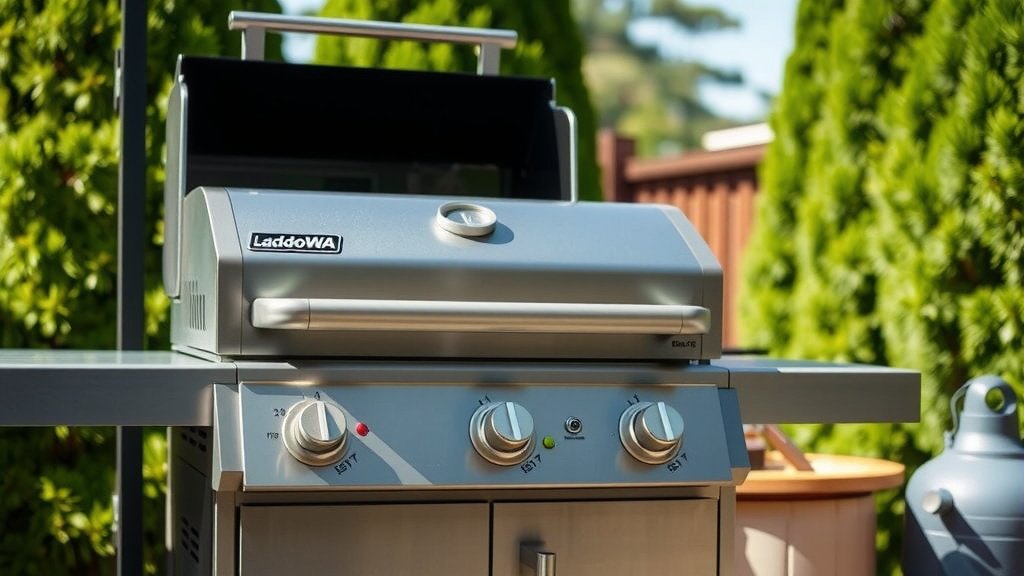
No, not every propane grill can be converted to natural gas. Only specific models designed by manufacturers for conversion, often with readily available conversion kits, can be safely switched.
Attempting to convert a grill not intended for natural gas risks serious safety hazards due to differing gas pressures and burner orifice sizes.
- It’s not possible to convert just any propane grill to natural gas safely.
- You must use a manufacturer-approved conversion kit specifically for your grill model.
- Gas types have different pressures and burner orifice requirements.
- Ignoring compatibility leads to dangerous situations like gas leaks or improper flame.
- Professional installation is often recommended for safety and warranty protection.
Can Any Propane Grill Be Converted To Natural Gas?
Many grill owners wonder if they can switch their propane setup to natural gas. The straightforward answer is no, you cannot convert just any propane grill to natural gas. It requires a grill explicitly designed to be convertible, often with a dedicated kit from the manufacturer.
Why You Can’t Convert Just Any Grill
Think of it like trying to put diesel in a gasoline car; the engines are just different. Propane and natural gas operate at different pressures. Propane delivers fuel at a much higher pressure than natural gas. Your grill’s components, like the regulator and burner orifices, are calibrated for one or the other.
Understanding the Gas Differences
Natural gas and propane are not interchangeable without adjustments. Natural gas burns at a lower pressure and requires larger orifices to deliver enough fuel for the same BTU output. Propane, being denser and higher pressure, needs smaller openings.
| Feature | Propane (LP) | Natural Gas (NG) |
|---|---|---|
| Pressure (typical) | High (around 11 inches water column) | Low (around 3.5 to 7 inches water column) |
| BTU per cubic foot | Higher (2,500 BTU) | Lower (1,000 BTU) |
| Orifice Size | Smaller for burners | Larger for burners |
| Storage/Supply | Portable tanks | Piped from utility line |
Safety First, Always
Messing with gas lines and pressures is not a casual DIY project. Incorrect conversions can lead to gas leaks, inefficient burning, carbon monoxide buildup, or even explosions. Your safety, and the safety of those around you, must be the top priority.
Is Your Grill Convertible? How to Check
Before you even dream of natural gas, check your grill’s manual or look for a label. Manufacturers clearly state if a grill is convertible or if a kit exists. If your manual is silent on conversion, or if no kit is listed for your specific model, it is likely not convertible.
You can also check the manufacturer’s website by inputting your grill’s model number. We found that most reputable brands like Weber, Napoleon, and Char-Broil offer conversion options for select models (Consumer Reports).
What Does a Conversion Kit Include?
A proper conversion kit isn’t just a hose. It typically includes new burner orifices, a natural gas regulator, and possibly a longer flexible hose suitable for a house gas line. These parts are designed to match your specific grill model and gas type perfectly.
Why Manufacturer Kits are Essential
Using a manufacturer-approved kit ensures that all components are correctly sized and tested for your grill. This maintains your grill’s performance, safety features, and often keeps your warranty intact. Generic kits are a big no-no; they rarely provide the precise fit and safety needed.
When Not to Convert
Do not attempt to convert if your grill is old, rusted, or if parts are missing or damaged. An older grill might not handle the new gas type safely. Also, if you cannot find a specific manufacturer kit, it means your grill is not designed for conversion. Do not improvise.
The Conversion Process: What to Expect
If your grill is convertible and you have the right kit, the process generally involves replacing the propane regulator with a natural gas one. You’ll also swap out the small orifices on each burner. This changes the gas flow to match the lower pressure of natural gas.
DIY or Professional Installation?
Many experts say that while some mechanically inclined individuals might handle the conversion, professional installation is highly recommended (Gas Appliance Manufacturers Association). A certified technician can ensure proper installation, leak testing, and adherence to local codes. They have the right tools and expertise to keep you safe.
Essential Tools for Conversion (If DIY)
- Wrench set
- Screwdriver set
- Thread sealant (gas rated)
- Soapy water solution (for leak testing)
- Manufacturer’s instructions (absolutely vital!)
Common Pitfalls to Avoid
A common mistake is using the wrong thread sealant or not applying enough. Another is failing to properly leak test after installation. Skipping any step in the manufacturer’s instructions can lead to dangerous outcomes. Always follow directions precisely.
Cost Considerations
Converting isn’t free. You’ll need to purchase the conversion kit, which can range from $50 to $150 or more depending on your grill model. If you opt for professional installation, factor in labor costs, which vary by region (HomeAdvisor data often suggests $100-$300 for gas line work).
Pre-Conversion Checklist
Before you even open that conversion kit, run through this quick checklist:
- Verify your grill model is convertible.
- Obtain the exact manufacturer-approved conversion kit.
- Ensure you have a natural gas line installed near your grill location.
- Check local regulations and permit requirements for gas line work.
- Gather all necessary tools or schedule a professional.
After the Conversion: First Use
Once converted, perform a thorough leak test using soapy water on all connections. If you see bubbles, you have a leak that needs addressing immediately. After confirming no leaks, light your grill. The flames should be consistent, blue, and stable. Yellow or orange flames often indicate improper gas-air mixture, which could mean an issue with the conversion or dirty burners.
Conclusion
While the idea of converting your propane grill to natural gas is appealing for convenience and cost savings, it is not a universally applicable solution. The bottom line is that only specific grills with manufacturer-approved kits can be safely converted. Always prioritize safety, follow instructions, and consider professional help. Enjoy your grilling season, knowing your setup is secure and correct!
Frequently Asked Questions
Is it cheaper to grill with natural gas or propane?
Over time, grilling with natural gas is generally cheaper than propane. Natural gas is supplied directly to your home at a lower unit cost, and you avoid the recurring expense and hassle of refilling propane tanks. The upfront cost for the gas line and conversion kit is the primary expense for natural gas users.
How do I know if my grill is a convertible model?
To check if your grill is convertible, consult your owner’s manual first. Look for a section on “Conversion” or “Natural Gas Options.” You can also find this information on the manufacturer’s website by searching for your specific grill model number. If no information is found, it’s likely not convertible.
What happens if I try to use propane components with natural gas (or vice versa)?
Using propane components with natural gas, or vice versa, is extremely dangerous. If you try to run natural gas through propane orifices, you’ll get very weak, small flames because natural gas needs larger openings. Conversely, running high-pressure propane through natural gas orifices can cause dangerously large flames, black soot, and a significant fire hazard.
Can a handyman convert my grill?
While some handymen might be skilled, it’s always best to hire a licensed gas fitter or a technician certified in appliance conversion. Gas work requires specific knowledge and adherence to local codes. Improper installation by someone unqualified can void your insurance and create serious safety risks, as research shows (National Fire Protection Association).
What are the benefits of converting to natural gas?
Converting to natural gas offers several benefits: endless fuel supply means no more running out mid-cook, natural gas is typically less expensive per unit than propane, and you eliminate the need to transport or store heavy propane tanks. It provides a more convenient and often more cost-effective grilling experience for those with a natural gas line.
