
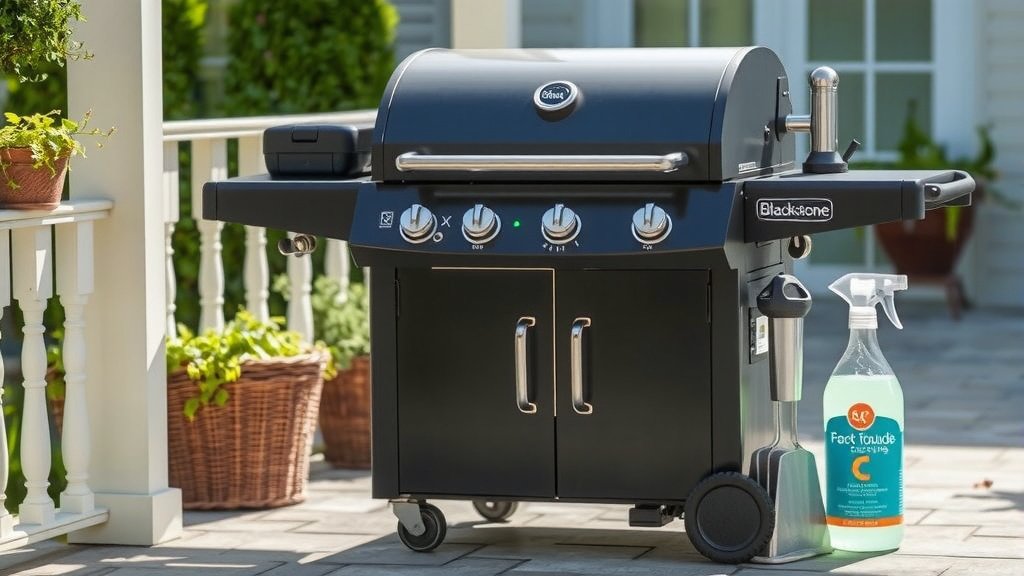
To clean a Blackstone grill, you typically use a griddle scraper to remove food debris, hot water to loosen residue, and paper towels or a cloth to wipe it clean, followed by a thin layer of cooking oil for seasoning and protection.
You avoid harsh soaps and abrasive scrubbers, focusing on gentle methods that preserve the seasoned surface of your Blackstone griddle.
- Keep your Blackstone grill in top shape by cleaning it immediately after cooking while it is still warm.
- Use a sturdy metal scraper and hot water to remove food bits and grime, never harsh soaps.
- Always dry the griddle completely and apply a thin coat of cooking oil to maintain its non-stick seasoning and prevent rust.
- Store your grill with a cover in a dry place to shield it from the elements.
- Regular maintenance ensures your griddle lasts longer and performs better for every meal.
What Do You Use To Clean A Blackstone Grill?
When you clean a Blackstone grill, the main tools are a flat metal scraper, hot water, and a good cooking oil. We found that these items are key to maintaining the griddle’s unique seasoned surface.
Why Cleaning Your Blackstone Grill Matters
Keeping your Blackstone clean isn’t just about appearances; it’s about making your griddle last. A well-cared-for griddle performs better and stays safe for cooking.
The seasoning layer on your griddle is like its non-stick coating. Cleaning it correctly protects this layer, making your cooking experience much smoother. If you neglect cleaning, you risk losing this important surface.
Regular cleaning also helps prevent rust, a common enemy of cast iron and steel griddles. Rust can spoil your food and shorten the life of your equipment (Food Safety and Inspection Service).
Essential Daily Cleaning Steps
Many griddle owners agree that cleaning your Blackstone right after cooking is best. It’s often easier when the griddle is still warm.
First, use a griddle scraper to push off any food residue into the grease trap. We found that a good, sturdy scraper makes this job simple and quick.
Next, pour a small amount of hot water onto the griddle surface. The heat helps to steam off any stuck-on bits. Use your scraper to work these loosened particles away.
After scraping, wipe the surface clean with paper towels or a dedicated grill cloth. Keep wiping until all the water, food bits, and oil are gone and the surface is dry.
Finally, apply a very thin layer of cooking oil. This re-seasons your griddle and protects it until your next cookout. Think of it as putting a moisturizer on your skin.
Deep Cleaning Your Blackstone: When and How
Most of the time, the daily cleaning routine is enough. But sometimes, especially after a particularly messy cook or if you see a bit of rust, a deeper clean might be needed.
Deep cleaning involves a bit more scrubbing, still without harsh chemicals. It’s all about working with the heat and some simple tools.
The Power of Hot Water and Scrapers
For tougher spots, hot water is your friend. We found that pouring some hot water on a still-warm griddle creates steam, which is great for lifting stubborn grime.
Use your scraper in short, firm strokes to get under the stuck-on food. It’s like gently scraping ice off a windshield. You want to be firm but not aggressive.
Some people even use a bit of ice on a hot griddle. The rapid temperature change helps lift debris, but be careful; only do this if your griddle is very hot to avoid warping. We recommend sticking to hot water for most situations.
Avoid Harsh Soaps and Chemicals
This is a big one: never use dish soap or harsh cleaning chemicals on your Blackstone griddle. We found this is a common mistake that strips away the hard-earned seasoning.
The seasoning is a layer of polymerized oil that makes your griddle non-stick and flavorful. Soap breaks down this oil, leaving your griddle vulnerable to rust and making food stick (Good Housekeeping Institute).
If you accidentally use soap, don’t panic. You will just need to re-season your griddle from scratch, which takes a little time and effort.
Tools and Supplies You’ll Need
Having the right gear makes cleaning your Blackstone a breeze. Here are some items we found to be really helpful:
- Griddle Scraper: A sturdy, flat metal scraper is a must-have. It helps push off food and loosen stuck-on bits.
- Paper Towels or Rags: Absorbent paper towels or dedicated microfiber cloths are perfect for wiping the griddle clean and applying oil.
- Cooking Oil: Any high smoke point cooking oil works well for re-seasoning. Think flaxseed, avocado, or grapeseed oil.
- Water Squeeze Bottle: Handy for applying hot water precisely onto the griddle surface.
- Grill Brick or Scrubber Pad: For occasional deeper cleaning or rust removal, a grill brick designed for griddles can be effective.
Choosing the Right Oil for Seasoning and Protection
Not all oils are equal when it comes to seasoning and protecting your griddle. We found that oils with a high smoke point work best.
Oils like flaxseed, grapeseed, avocado, or even regular vegetable oil are good choices. They create a strong, durable seasoning layer that helps prevent food from sticking and protects the metal (Culinary Institute of America).
Olive oil or butter, while great for cooking, are not ideal for seasoning because of their lower smoke points. They can leave a sticky residue rather than a hard, protective layer.
Removing Stubborn Rust Spots
Seeing rust can be alarming, but it’s often fixable. If you spot a small rust patch, don’t despair. You can usually remove it with some gentle work.
Use a grill brick, steel wool (very carefully and sparingly), or even a wad of aluminum foil with a little cooking oil to gently scrub away the rust. Work in small circles until the rust disappears.
After removing the rust, it’s very important to clean the area thoroughly and then re-season that part of the griddle immediately. This protects the exposed metal from future rust.
Rust Prevention Tips
Prevention is always easier than a cure when it comes to rust. We found a few simple habits make a big difference.
Always make sure your griddle is completely dry after cleaning and before applying oil. Any moisture left behind can lead to rust.
Applying a thin, even coat of cooking oil after every use creates a barrier against moisture. This is like giving your griddle an invisible shield.
Finally, invest in a good griddle cover. Protecting your Blackstone from rain, dew, and even high humidity is a simple yet very effective way to keep rust at bay.
Common Cleaning Mistakes to Avoid
Many griddle owners make small errors that can hurt their Blackstone over time. Learning what not to do is just as important as knowing what to do.
Using metal spatulas with sharp edges can scratch the seasoning off. Also, leaving food debris to harden overnight makes cleaning much harder later on.
Not drying your griddle completely before storage is a quick path to rust. Remember, moisture is the enemy of raw steel.
Checklist: Keeping Your Blackstone Happy
Want to keep your Blackstone griddle in top shape? Follow this quick checklist after every use:
- Scrape off all food debris while warm.
- Use hot water to steam off stuck-on bits.
- Wipe the griddle surface until completely clean.
- Ensure the griddle is totally dry.
- Apply a thin, even layer of high smoke point cooking oil.
- Cover your griddle after it cools down.
Conclusion
Keeping your Blackstone grill clean is simple when you know the right steps. Focus on gentle, consistent care using a scraper, hot water, and cooking oil. Avoid harsh soaps and abrasive materials, which can damage the essential seasoning. Regular maintenance not only makes your cooking easier but also protects your investment, letting you enjoy delicious griddle-cooked meals for many years to come.
Can I use soap on my Blackstone griddle?
No, you should not use soap on your Blackstone griddle. Soap can strip away the griddle’s seasoning, which is a protective layer of polymerized oil that makes it non-stick and prevents rust.
How often should I clean my Blackstone grill?
You should clean your Blackstone grill after every use. A quick clean while it’s still warm, followed by oiling, is usually sufficient for daily maintenance.
What kind of oil is best for seasoning a Blackstone griddle?
High smoke point cooking oils are best for seasoning, such as flaxseed oil, grapeseed oil, avocado oil, or even regular vegetable oil. These oils create a strong, durable seasoning layer.
My Blackstone griddle has rust. How do I remove it?
To remove rust, gently scrub the affected area with a grill brick, steel wool, or a wad of aluminum foil along with a little cooking oil. After removing the rust, clean the spot and immediately re-season it.
Do I need to cover my Blackstone grill?
Yes, it’s highly recommended to cover your Blackstone grill after it cools down. A cover protects it from moisture, dust, and elements that can lead to rust and damage the griddle surface.
