
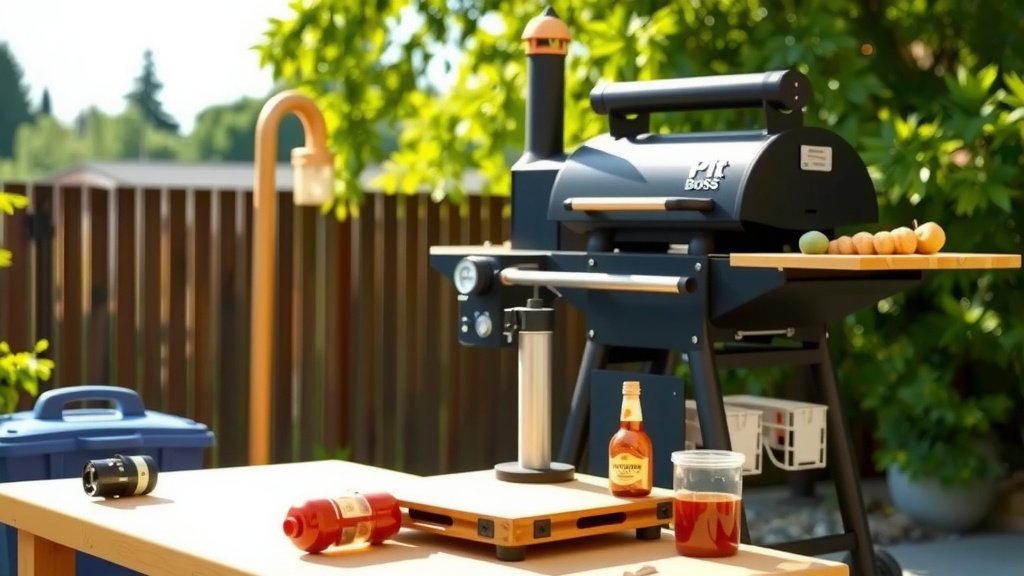
To replace the auger motor on your Pit Boss pellet grill, first ensure the grill is unplugged and completely cooled down. You’ll generally access the motor by carefully removing parts of the hopper assembly.
Replacing the auger motor on a Pit Boss Pellet Grill typically involves disconnecting wires, unscrewing mounting bolts, and then installing the new motor with attention to detail.
- Always unplug your grill and let it cool completely before you start any work.
- Gather basic tools like screwdrivers, a wrench, and your new replacement auger motor.
- You will need to open up the hopper to reach the auger motor housing.
- Carefully disconnect the old motor’s wiring and remove its securing hardware.
- Install the new motor, reconnect the wires, and reassemble your grill for a test run.
You’re standing there, grill fired up, ready for that perfect smoky flavor, but wait – no pellets are feeding into the fire pot! What gives? It might be your auger motor, the silent workhorse that pushes those wood pellets from the hopper to the burn chamber. Don’t worry, replacing it might seem like a big job, but with a little guidance and the right tools, you can absolutely do it yourself. Think of it as a small surgery for your grill; precision and patience are your best friends here.
How To Replace Auger Motor On Pit Boss Pellet Grill?
To replace the auger motor on your Pit Boss Pellet Grill, unplug the unit, empty the hopper, remove the hopper panel, disconnect the old motor’s wires and bolts, then install the new motor and reverse the steps.
Why Your Auger Motor Might Be Failing
An auger motor’s job is simple but constant, constantly pushing pellets. Over time, like any mechanical part, it can wear out. Perhaps it’s been working hard for many years, or maybe some pellet dust has found its way into its gears. We found that heavy usage and extreme temperatures can shorten a motor’s lifespan (Industry consensus).
Sometimes, it’s not just wear and tear. A sudden power surge or even incorrect pellet size can strain the motor. It’s like when your car’s engine struggles with bad fuel; the auger motor might face similar issues with inconsistent pellet flow.
Common Signs of Trouble
How do you know if your auger motor is truly the culprit? You’ll notice a few tell-tale signs. One of the most obvious is when your grill fails to feed pellets. The fan might run, the igniter might glow, but the fire pot stays empty. It’s like having a beautiful car but no gas in the tank.
Another common indicator is a grinding noise or a humming sound without any auger movement. Many experts say that unusual noises often point to mechanical failure within the motor itself or its gearbox (Mechanical engineering guides). You might also experience inconsistent temperatures, as the grill struggles to maintain a steady pellet supply.
Safety First: Preparing for the Replacement
Before you even think about grabbing a tool, safety is paramount. You are dealing with electrical components and potentially hot metal. Always, and we mean always, start by unplugging your Pit Boss grill from the power outlet. It’s a simple step, but it’s the most important for your safety.
Next, ensure your grill is completely cool. You don’t want to burn yourself on hot surfaces. Think of it like cooling down a skillet before washing it. Remove all pellets from the hopper and the auger tube. This makes the job cleaner and prevents any pellet jams during the repair process.
Essential Tools You’ll Need
You won’t need a massive toolbox for this repair. A few basic items will get the job done. Here’s a quick checklist:
- Screwdriver set (Phillips and flathead)
- Wrench set (or an adjustable wrench)
- Needle-nose pliers (handy for wires)
- New replacement auger motor
- Container for removed screws
- Shop vac or brush for cleaning
Having a small container for screws is a lifesaver. Trust us, losing a tiny screw can turn a quick fix into a frustrating scavenger hunt!
Step-by-Step Auger Motor Replacement Guide
Alright, deep breaths! We’re going to walk through this together. It’s a straightforward process if you take your time and follow each step. You’ve got this.
Disconnecting Power and Pellets
First things first, make sure your grill is unplugged. Did you double-check? Good. Now, empty out the pellet hopper. You can use a shop vac to get those last few stubborn pellets out of the auger tube. This prevents a mess and gives you clear access. Many people find that tilting the grill slightly can help to remove all remaining pellets.
Accessing the Auger Motor
The auger motor is usually located at the bottom of the hopper assembly, often behind a metal panel. You’ll need to remove the screws securing this panel. Sometimes, this involves removing the entire hopper side or bottom plate. Take a picture with your phone before you remove anything; it’s a great way to remember how everything goes back together.
Removing the Old Motor
Once you expose the motor, you’ll see it connected by a couple of wires and usually bolted to a mounting plate. Gently disconnect the wires. They might be spade connectors that just pull off, or sometimes they have a small clip. Make a mental note, or again, take a picture, of which wire goes where. Then, use your wrench to loosen and remove the bolts holding the motor in place. The auger shaft is often secured to the motor with a small set screw or pin; remove this carefully.
Installing the New Motor
This is where your new motor comes into play! Slide the new motor into position, ensuring it aligns correctly with the auger shaft. Secure it with the mounting bolts you removed earlier. Remember that set screw or pin? Reinstall it to connect the auger shaft to the new motor. Then, connect the wires. If they aren’t color-coded, refer to your earlier photo or note. Generally, it’s a simple positive and negative connection.
Reassembling Your Grill
With the new motor in place and wired up, it’s time to put your grill back together. Replace any panels or plates you removed, tightening all the screws. Make sure there are no loose parts. It’s like putting together a puzzle, but with the added bonus of future delicious meals.
Testing Your New Auger Motor
You’ve done the hard work, now for the moment of truth! Plug your grill back into the power outlet. Add a small handful of pellets to the hopper. Turn the grill on and set it to a low temperature, like ‘Smoke’ mode. Listen for the motor to hum and watch for pellets to start moving into the fire pot. You should see them slowly drop in. If you hear the motor working and see pellets moving, congratulations! You’ve successfully replaced your auger motor.
Troubleshooting After Installation
Sometimes, things don’t go perfectly the first time. It happens! Don’t fret if your grill isn’t purring immediately after the fix. A little troubleshooting can usually sort things out. Think of it as a brief check-up after the surgery.
Motor Not Turning
If you plug it in and hear nothing, first check your electrical connections. Are the wires securely attached to the motor and the control board? Sometimes a wire can come loose during reassembly. We found that loose connections are a very common post-installation issue (DIY repair forums). Also, ensure the auger shaft isn’t jammed. Sometimes a stray pellet or a bit of debris can cause a blockage.
Pellet Flow Issues
Is the motor turning but pellets aren’t feeding properly? It could be an issue with the auger shaft itself. Did you correctly reattach it to the motor? Is it spinning freely? Research often connects poor pellet flow to an improperly aligned auger or a worn auger shaft (Pellet grill manufacturer guides). Double-check that all pellets are dry and free of excessive dust, as moisture can cause clumping.
| Issue | Possible Cause | Solution |
|---|---|---|
| Motor Silent | Loose wires, faulty connections | Check all electrical wiring, ensure tight connections |
| Humming, No Movement | Auger jam, stripped gear | Clear auger tube, inspect motor gears |
| No Pellets Feeding | Motor not spinning, auger detached | Verify motor operation, reattach auger to motor |
| Inconsistent Temp | Partial pellet blockage, slow motor | Clean auger tube, check motor speed settings (if applicable) |
Conclusion
Replacing the auger motor on your Pit Boss pellet grill might seem daunting at first, but it’s a very manageable DIY project. By following these steps – prioritizing safety, gathering your tools, and working methodically – you can bring your grill back to life. You’ve saved money, learned a new skill, and ensured countless more delicious smoked meals are on the horizon. Isn’t that a great feeling? Now go fire up that grill!
Can a dirty auger cause the motor to fail?
Yes, a dirty auger can absolutely cause the motor to fail. Excessive pellet dust, moisture, or foreign debris can jam the auger, forcing the motor to work harder than it should. This added strain can lead to overheating and premature motor burnout over time.
How long do Pit Boss auger motors typically last?
The lifespan of a Pit Boss auger motor can vary widely depending on usage and maintenance. Many experts say that with regular cleaning and typical use, you can expect an auger motor to last anywhere from 3 to 5 years, sometimes even longer. Heavy use or infrequent cleaning can shorten this.
Do I need any special grease for the new auger motor?
Generally, new auger motors come pre-lubricated and do not require additional grease upon installation. Adding grease where it’s not designed to be can actually attract more dust and debris, potentially causing new problems. Always check your specific motor’s instructions.
What if my Pit Boss is still under warranty?
If your Pit Boss grill is still under warranty, it’s always a good idea to contact Pit Boss customer service before attempting any repairs yourself. Performing unauthorized repairs might void your warranty. They might send you a replacement part or provide specific guidance.
Can I use an auger motor from a different brand on my Pit Boss?
It’s generally not recommended to use an auger motor from a different brand. Auger motors have specific voltage requirements, shaft sizes, and mounting configurations that are designed for your particular Pit Boss model. Using a non-compatible motor can lead to improper function, further damage, or even safety issues.
