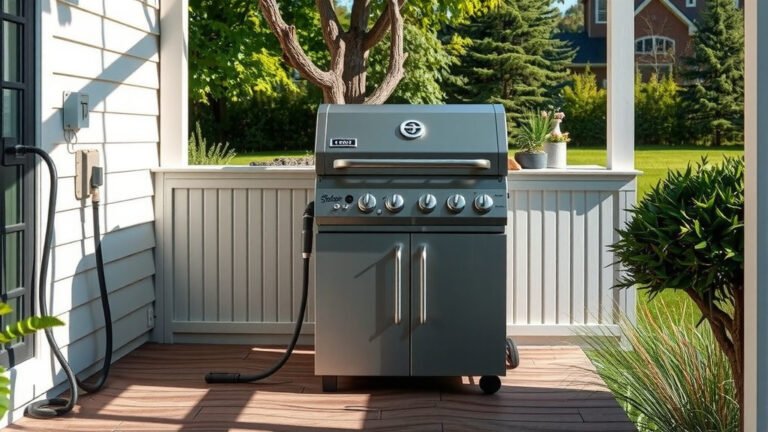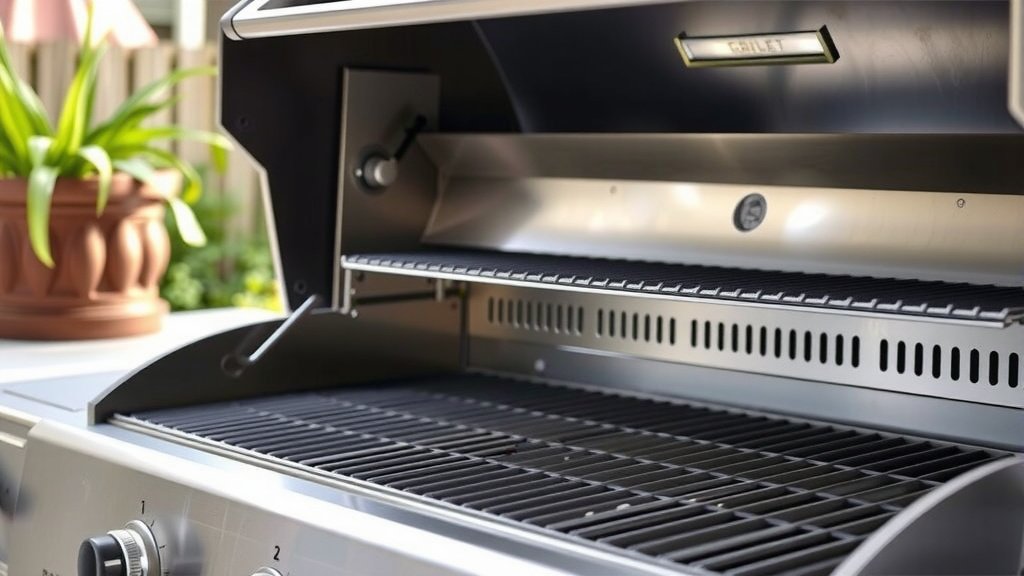
To effectively clean a BBQ grill, first preheat your grill to a high temperature for about 10-15 minutes to carbonize any leftover food residue. After heating, scrape the grates with a sturdy grill brush or a dedicated grill scraper to remove the loosened debris.
For a thorough cleaning, let the grill cool down, then remove and wash grates with warm, soapy water, tackling the interior firebox, burners, and drip pan with appropriate tools and cleaners.
Here’s a quick summary of how to get your BBQ grill sparkling clean:
- Heat your grill after each use to burn off food debris easily.
- Brush the grates thoroughly while they are still warm, but not scorching hot.
- Perform a deep clean several times a year, focusing on all grill components.
- Always allow your grill to cool completely before a more extensive cleaning.
- Protect your cleaned grill from the elements with a good quality cover.
How Do I Clean A BBQ Grill?
Cleaning your BBQ grill ensures your food tastes great and your grill lasts longer. It’s a simple process that keeps your cooking surface hygienic and ready for your next outdoor feast.
Why Clean Your Grill Regularly?
Think of your grill as a kitchen appliance that lives outdoors. You wouldn’t cook on a dirty stovetop, right? A clean grill prevents old food bits from sticking to new meals, which we found can really affect flavor.
Many experts say regular cleaning also extends the life of your grill components. It wards off rust and keeps parts working smoothly (Grilling Manufacturers Association).
The Immediate Post-Cook Clean
This is your first line of defense against stubborn grime. It’s super quick and makes a huge difference. You want to do this while the grates are still warm.
The heat from cooking helps carbonize any food left behind. This makes it much easier to scrape off. Just let the grill cool slightly so you can handle it safely.
Essential Cleaning Tools You’ll Need
Having the right tools makes the job much simpler. You don’t need a huge arsenal, just a few key items. We found that simple tools are often the most effective.
- Stiff Wire Brush or Scraper: Essential for grate cleaning.
- Grill-Safe Degreaser: For deep cleaning tough grease.
- Bucket of Warm Soapy Water: Your go-to for many parts.
- Microfiber Cloths or Sponges: For wiping down surfaces.
- Rubber Gloves: Protect your hands from grime and chemicals.
- Aluminum Foil: Handy for stubborn spots or a quick scrub.
The Daily Grind: Cleaning Your Grates After Each Use
After you’ve enjoyed your meal, it’s time for a quick grill tidy-up. This small habit prevents big headaches later. It only takes a few minutes, truly.
First, turn your grill back on to high heat for about 10-15 minutes. This extra heat helps burn off any remaining food particles. You’ll see them turn to ash, making them easier to remove.
Once the grill has cooled a bit (but is still warm), take your stiff wire brush. Scrub the grates vigorously to remove all the loosened residue. It should come off quite easily. Many grill masters swear by this method.
Research often connects clean grates with better food hygiene (USDA Food Safety). If you’re worried about wire bristles, consider a bristle-free scraper or a wooden grill scraper.
Deep Cleaning Your BBQ Grill: A Seasonal Ritual
About two to four times a year, depending on how much you grill, you’ll want to give your BBQ a thorough deep clean. This is where you get into all the nooks and crannies. It’s like spring cleaning for your outdoor kitchen.
Always disconnect the gas tank or unplug the electric grill before you start a deep clean. Safety first, right? Then, let everything cool down completely. You don’t want to burn yourself.
Cleaning the Grill Grates Thoroughly
Remove the grates from your grill. Immerse them in a bucket of warm water mixed with dish soap. Let them soak for 15-30 minutes; this helps loosen baked-on grease.
After soaking, scrub them with a sponge or a stiff brush. For really stubborn spots, a grill-safe degreaser might be needed. Rinse them thoroughly and let them air dry completely before putting them back.
Tackling the Burner Covers (Flavorizer Bars)
These metal plates sit above your burners and catch drippings. Remove them carefully. Scrape off any baked-on food or grease using a plastic scraper or brush.
You can wash them in warm, soapy water. Ensure they are fully dry before returning them to the grill. Many manufacturers stress the importance of keeping these clean for proper heat distribution.
Cleaning the Burners Themselves
The burners are crucial for even heat. Gently remove them and check for any clogged holes. A small wire or a paperclip can clear blockages. We found that a soft brush can clean the outside surface.
Never use water directly on the burner tubes if they are cast iron. If they are stainless steel, a quick wipe with a damp cloth is fine. Make sure they are perfectly dry before reinstallation.
Wiping Down the Grill Interior (Firebox)
The inside of your grill’s hood and firebox can accumulate a lot of grease and carbon. Use a plastic scraper to gently remove large flakes. Then, wipe down the interior with warm, soapy water.
For stainless steel interiors, a dedicated grill cleaner or a paste of baking soda and water works well. Always rinse well and dry completely to prevent rust. Many guidelines point to proper interior maintenance for grill longevity.
Don’t Forget the Drip Pan!
The drip pan catches all the grease and food bits. This is probably the dirtiest part! Remove it and empty any contents into the trash. Scrape out solidified grease.
Wash the drip pan thoroughly with warm, soapy water. Lining it with aluminum foil and changing it regularly can make future clean-ups much easier. It’s a small step that makes a big difference.
| Component | Cleaning Frequency | Recommended Tool | Key Tip |
|---|---|---|---|
| Grill Grates | After every use | Wire brush / Scraper | Clean while warm for best results. |
| Burner Covers | Every 2-3 months | Plastic scraper / Brush | Remove and scrape off built-up debris. |
| Burners | Every 6 months | Wire / Paperclip | Clear any clogged holes gently. |
| Interior (Firebox) | Every 6 months | Plastic scraper / Sponge | Wipe with soapy water, dry thoroughly. |
| Drip Pan | Every 2-3 uses | Sponge / Scraper | Empty contents; wash with soap and water. |
Checklist for a Quick Grill Clean-Up
- Preheat grill to high for 10-15 minutes.
- Scrub grates with a wire brush or scraper.
- Let the grill cool down completely.
- Empty and clean the drip pan.
- Wipe down exterior surfaces.
Caring for Different Grill Materials
Your grill’s exterior might be stainless steel, painted steel, or even porcelain-coated. Each type has slightly different cleaning needs. It’s like caring for different types of kitchen countertops, isn’t it?
Cleaning Stainless Steel Exteriors
Stainless steel looks fantastic when clean but can show smudges easily. Use a microfiber cloth with warm, soapy water. Always wipe with the grain of the steel to avoid streaks.
For a streak-free shine, many experts suggest a specialized stainless steel cleaner. Just spray it on and wipe with a clean, dry cloth. This keeps your grill looking sharp and new.
Maintaining Porcelain-Coated Surfaces
Porcelain is quite durable but can chip if hit hard. Use a soft cloth or sponge with warm, soapy water. Avoid abrasive scrubbers, which can scratch the finish.
If you have stubborn spots, a paste of baking soda and water can gently lift them. Rinse thoroughly and dry. This helps preserve the protective coating.
Rust Prevention and Grill Protection
Rust is the enemy of any outdoor metal appliance. Preventing it is easier than removing it. A little proactive care goes a long way.
Always ensure your grill is completely dry after cleaning. Moisture trapped in crevices can lead to rust. We found that allowing it to air dry in the sun works wonders.
Invest in a good quality grill cover. This protects your grill from rain, snow, and UV rays. A cover is like a winter coat for your grill, keeping it safe from the elements. Many manufacturers highly recommend using a cover.
Conclusion
Cleaning your BBQ grill doesn’t have to be a chore; it’s an investment in delicious meals and a long-lasting grill. By following these simple steps, you’ll keep your grill in top condition, ready for countless gatherings and mouth-watering cooks. Remember, a clean grill is a happy grill, and a happy grill means happy eaters!
FAQs About Cleaning Your BBQ Grill
How often should I deep clean my gas grill?
Many grill manufacturers suggest performing a thorough deep clean at least two to four times a year, especially if you grill frequently. For occasional grillers, twice a year, at the beginning and end of the grilling season, is often sufficient.
Can I use oven cleaner to clean my grill grates?
While oven cleaner is powerful, it is generally not recommended for grill grates, especially if they are porcelain-coated or cast iron. The harsh chemicals can damage the finish, leave a residue that affects food taste, and may be toxic if not thoroughly rinsed. Stick to grill-specific cleaners or warm soapy water.
What’s the best way to remove rust from my grill grates?
For light rust, a paste of baking soda and water applied with a stiff wire brush or steel wool can be effective. For heavier rust, some experts suggest using a wire brush attachment on a drill (with caution) or soaking grates in vinegar before scrubbing. Always re-season cast iron grates after rust removal to prevent future corrosion.
Is it better to clean a grill when it’s hot or cold?
For a quick post-cook clean of the grates, it’s best to clean the grill while it’s still warm but not scorching hot. The residual heat helps carbonize food, making it easier to scrape off. However, for a deep clean involving component removal and scrubbing, always ensure the grill is completely cold to prevent burns and allow for safe handling.
How do I prevent my grill from getting dirty so fast?
Beyond regular cleaning, a few habits can help. Always preheat your grill thoroughly before adding food, as this helps prevent sticking. Also, oil your food or grates lightly before cooking. Covering your grill when not in use protects it from the elements and airborne debris, keeping it cleaner between uses.