
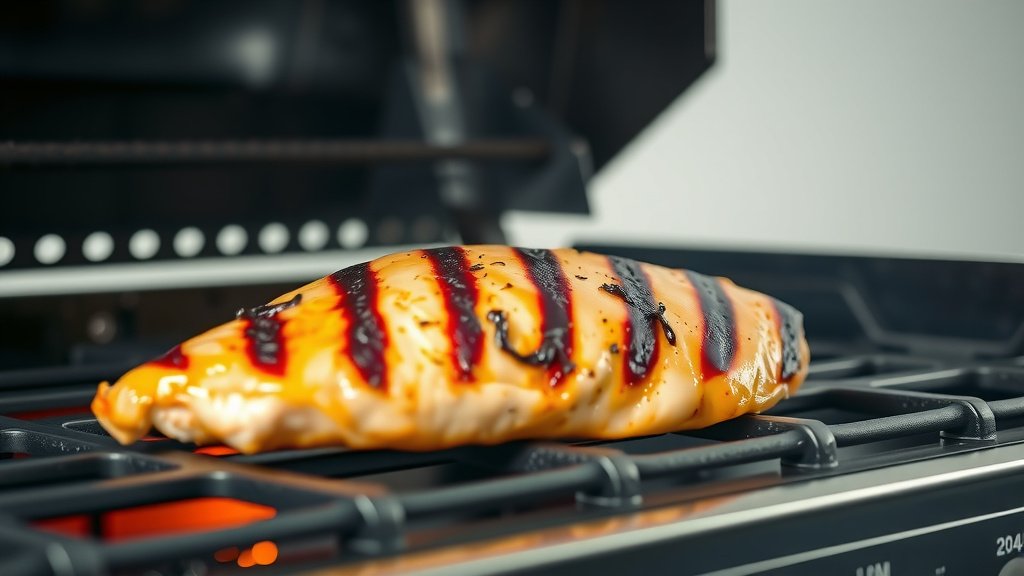
How to grill chicken on gas involves setting up a two-zone heat system, allowing you to sear your chicken over direct flame and then finish cooking it gently over indirect heat. This method helps achieve a delicious crispy skin and keeps the meat incredibly juicy.
You’ll preheat your gas grill to a medium-high temperature, aim for around 400-450°F initially, then sear the chicken for a few minutes per side before moving it to the cooler, indirect side to cook through to a safe internal temperature of 165°F.
Here’s a quick overview of what you’ll learn to grill chicken like a pro:
- Get your chicken ready with the right flavors.
- Set up your gas grill for perfect cooking zones.
- Learn the best steps for grilling, from searing to finishing.
- Discover handy tips and tricks for juicy, tender results.
- Know how to avoid common grilling mistakes.
How To Grill Chicken On Gas?
To grill chicken on gas, you’ll master two-zone cooking: sear over high heat for color and then finish over indirect heat until it reaches 165°F (74°C) internal temperature. This approach cooks chicken evenly without burning it.
Why Grill Chicken on Gas?
Grilling chicken on a gas grill offers fantastic control and convenience. You can easily adjust temperatures, making it simple to get that perfect char without drying out the meat. Plus, cleanup is often a breeze.
Quick Heat-Up Time
Gas grills heat up fast, letting you start cooking in minutes. This means less waiting and more enjoyment of your backyard meal. We found that most gas grills are ready to cook in about 10-15 minutes.
Consistent Temperature Control
You can easily fine-tune the heat on a gas grill. This control is vital for chicken, which needs precise temperatures to cook through without burning. Many experts say that consistent heat prevents tough or rubbery chicken.
Preparing Your Chicken for the Grill
Great grilled chicken starts long before it hits the grates. Think about selecting the right pieces and giving them a flavor boost. This preparation step makes a big difference in the final taste.
Choosing the Right Cut
Different chicken cuts cook differently. Boneless, skinless breasts are lean, while thighs and drumsticks are more forgiving. Bone-in, skin-on pieces offer the best flavor and juiciness, but take longer.
Consider what you prefer: quick-cooking for weeknights or something richer for a weekend treat. Many families enjoy a mix of pieces for everyone.
Marinate or Rub?
Give your chicken a flavor boost with a good marinade or dry rub. Marinades add moisture and tenderize, while rubs create a flavorful crust. We found that even a simple salt and pepper rub makes chicken shine.
For marinades, aim for at least 30 minutes, but several hours or overnight is even better. Just remember to pat chicken dry before grilling for better searing.
Setting Up Your Gas Grill for Chicken
Setting up your grill correctly is a game-changer for chicken. The key is creating different heat zones. This lets you manage the cooking process for perfect results every time.
The Two-Zone Heating Method
This technique is your secret weapon for grilling chicken. You’ll have one side of the grill hot (direct heat) and one side cooler (indirect heat). The hot side is for searing, the cool side is for finishing.
For a three-burner grill, turn two burners to medium-high and leave one off. For a two-burner, turn one to medium-high and the other off. This creates your hot and cool zones.
Preheat Like a Pro
Always preheat your gas grill thoroughly. Turn on your direct heat burners to medium-high and close the lid for 10-15 minutes. This gets the grates screaming hot for a good sear and helps prevent sticking.
A good preheat ensures those beautiful grill marks. It also helps to burn off any leftover bits from previous cooks, keeping your grill clean.
The Grilling Process: Step-by-Step
Now for the main event! Grilling chicken on gas is a dance between high heat and gentle cooking. Follow these steps for tender, flavorful chicken.
Searing for Flavor and Texture
Place your chicken pieces over the direct, hot side of the grill. Sear them for about 2-3 minutes per side. You’re looking for a golden-brown crust and nice grill marks here, not cooking through.
Don’t crowd the grill; give each piece space to sear properly. This initial blast of heat locks in juices and builds flavor. We found that a good sear makes chicken look much more appealing.
Indirect Cooking for Tenderness
After searing, move the chicken to the cooler, indirect heat zone. Close the lid and let it cook gently. This is where the magic happens, ensuring the chicken cooks through without drying out.
Cooking times vary based on the cut and thickness, as we found. Keep the grill lid closed as much as possible to maintain consistent temperature. This helps chicken cook more efficiently.
Checking for Doneness
The only reliable way to know if chicken is done is with a meat thermometer. Insert it into the thickest part of the chicken, avoiding bones. It should read 165°F (74°C).
Many guidelines point to 165°F as the safe internal temperature for chicken (USDA). Don’t rely on visual cues alone, as appearance can be misleading. A thermometer gives you peace of mind.
Here’s a quick guide for target internal temperatures:
| Chicken Cut | Internal Temperature |
|---|---|
| Breasts (Boneless) | 165°F (74°C) |
| Thighs/Drumsticks | 165°F (74°C) |
| Whole Chicken | 165°F (74°C) |
| Ground Chicken | 165°F (74°C) |
Rest Your Chicken
Once your chicken hits 165°F, remove it from the grill immediately. Transfer it to a clean cutting board and tent it loosely with foil. Let it rest for 5-10 minutes before slicing or serving.
This resting period allows the juices to redistribute throughout the meat. You’ll find your chicken will be much more tender and moist. Patience here really pays off.
Common Gas Grilling Mistakes to Avoid
Even seasoned grillers can make small errors. Avoid these common pitfalls to ensure your chicken is always a winner. A little awareness goes a long way.
- Not preheating enough: Cold grates mean sticking and no sear.
- Crowding the grill: This drops the temperature and steams the chicken instead of grilling.
- Flipping too often: Let the chicken develop a crust before turning it.
- Not using a thermometer: Guessing doneness risks undercooked or dry chicken.
- Forgetting to rest: This is a crucial step for juicy meat.
Cleaning Your Grill Afterward
After the delicious meal, remember to clean your grill. Turn the burners to high for 5-10 minutes to burn off any food residue. Then, brush the grates clean with a sturdy wire brush.
This simple step prevents future sticking and keeps your grill ready for the next cookout. A clean grill means better flavor and easier maintenance. We found that a clean grill just performs better.
Before you even fire up the grill, make sure you’ve covered these essentials:
- Is your propane tank full?
- Is the chicken marinated or seasoned?
- Do you have a reliable meat thermometer handy?
- Are your grilling tongs and spatulas clean?
- Is your grill grate clean and lightly oiled?
Conclusion
Grilling chicken on a gas grill is incredibly rewarding when you know the simple steps. By mastering two-zone heating, proper searing, and accurate temperature checks, you’ll create consistently juicy and flavorful chicken. Remember to prepare your chicken well and give it time to rest. Enjoy the process and the amazing meals you’ll create!
FAQ: How do I prevent chicken from sticking to the gas grill?
To prevent chicken from sticking, always preheat your grill thoroughly until the grates are very hot. Then, clean the grates with a wire brush and lightly oil them with a high-smoke point oil before placing the chicken. Ensure your chicken is patted dry to prevent steaming.
FAQ: What is the ideal temperature for grilling chicken on a gas grill?
The ideal temperature for grilling chicken on a gas grill involves two zones. Aim for a direct heat zone around 400-450°F (204-232°C) for searing, and an indirect heat zone around 325-350°F (163-177°C) for finishing the cook.
FAQ: Can I grill frozen chicken on a gas grill?
No, it’s not recommended to grill frozen chicken directly on a gas grill. It cooks unevenly, can be tough, and poses a food safety risk. Always thaw chicken completely in the refrigerator before grilling to ensure safe and even cooking.
FAQ: How long does it take to grill different parts of chicken on a gas grill?
Grilling times vary by cut. Boneless, skinless breasts might take 6-10 minutes over indirect heat after searing. Bone-in thighs or drumsticks could take 20-30 minutes. Always cook until the internal temperature reaches 165°F (74°C).
FAQ: What’s the best way to get crispy skin on grilled chicken?
To achieve crispy skin, pat the chicken skin very dry before grilling. Start by searing it over direct, high heat for a few minutes per side until golden brown. Then, finish cooking over indirect heat with the lid closed. This allows the fat to render and the skin to crisp up nicely.
