
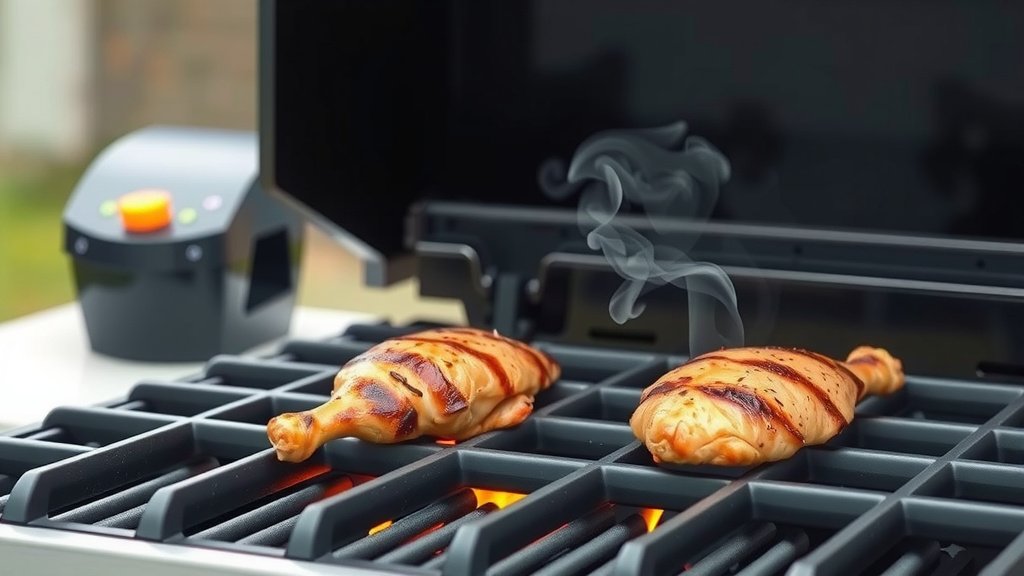
To grill chicken breasts on a gas grill, preheat your grill to medium-high (around 400-450°F) for 10-15 minutes. Cook chicken breasts directly over the heat for 5-7 minutes per side, or until they reach an internal temperature of 165°F.
Flattening chicken breasts to an even thickness helps ensure uniform cooking and prevents dry spots. Using a meat thermometer is key for perfect doneness every time.
- Get evenly cooked chicken every time by flattening breasts.
- Preheat your gas grill to a medium-high setting for best results.
- Cook chicken breasts directly, then use indirect heat if needed for thicker pieces.
- Always check for a safe internal temperature of 165°F with a meat thermometer.
- Let your grilled chicken rest for juicier, more tender results.
How To Grill Chicken Breasts On A Gas Grill?
Grilling chicken breasts on a gas grill is simple with the right approach. You want juicy, flavorful chicken, not dry, rubbery pieces.
Achieve perfectly grilled chicken by focusing on preparation, proper heat, and precise timing. Let’s get you there.
Prepare Your Chicken for Grilling
Preparation is the first step to success when grilling. Think of it like getting your canvas ready before painting a masterpiece.
Start with fresh, boneless, skinless chicken breasts. They are a versatile foundation for many meals.
Flattening for Even Cooking
Chicken breasts often have a thicker and thinner end. This makes them cook unevenly, with thin parts drying out.
Place each breast between two pieces of plastic wrap. Gently pound the thickest part with a meat mallet until the breast is uniform in thickness (about ¾ inch).
Seasoning or Marinating
Seasoning adds amazing flavor to your chicken. A simple mix of salt, pepper, garlic powder, and paprika works wonders.
For more flavor and moisture, consider a marinade. Marinating for 30 minutes to 2 hours can make a huge difference in tenderness (USDA).
- Olive oil
- Lemon juice or vinegar
- Garlic, minced
- Dried herbs (oregano, thyme)
- Salt and pepper
- A touch of honey or brown sugar
Setting Up Your Gas Grill
A well-prepared grill is just as important as well-prepared chicken. This ensures a clean cooking surface and the right temperature.
Don’t skip these steps; they prevent sticking and promote even cooking.
Clean the Grill Grates
Before you even turn on the gas, make sure your grates are clean. Leftover food particles cause sticking and flare-ups.
Use a good grill brush to scrape off any residue. Clean grates are essential for beautiful grill marks.
Preheat to the Right Temperature
Preheating is crucial for a great sear and preventing sticking. You need a hot grill.
Turn all burners to high, close the lid, and let it preheat for 10-15 minutes. Aim for a grill temperature of 400-450°F.
Oil the Grates
Once hot, lightly oil the grates. Use tongs to hold a paper towel dipped in high-smoke-point oil, like canola or grapeseed.
Wipe the grates carefully. This adds another layer of stick-prevention insurance.
The Grilling Process
Now comes the fun part: placing your chicken on the grill. This is where patience and observation pay off.
Cooking chicken directly over the heat is the standard method for breasts.
Direct Heat Method
Place your prepared chicken breasts directly over the lit burners. Close the lid to help cook them through and keep moisture in.
Cook for 5-7 minutes per side. You are looking for a nice sear and golden-brown grill marks.
Using a Meat Thermometer
Visual cues are helpful, but a meat thermometer is your best friend. It takes away all the guesswork about doneness.
Insert the thermometer into the thickest part of the chicken. The chicken is safe and ready when it reaches an internal temperature of 165°F (USDA).
Dealing with Flare-Ups
Sometimes fat drips and causes flare-ups. This can burn your chicken.
If a flare-up occurs, simply move the chicken to a cooler part of the grill, or to a spot with indirect heat. Keep an eye on your chicken.
Achieving Perfect Doneness
Knowing when your chicken is truly done ensures it’s safe and delicious. No one wants undercooked or overcooked chicken.
The thermometer is key, but visual checks can also confirm doneness.
Here’s a quick guide:
| Chicken Breast Thickness | Estimated Grill Time (Direct Heat) | Internal Temperature |
|---|---|---|
| Thin (½ inch) | 3-5 minutes per side | 165°F |
| Standard (¾ inch) | 5-7 minutes per side | 165°F |
| Thick (1 inch) | 7-9 minutes per side | 165°F |
The Importance of Resting
Once your chicken hits 165°F, it’s tempting to slice right in. But wait! There’s one more critical step.
Resting allows the juices to redistribute throughout the meat, making it much more tender and juicy. Think of it as a brief timeout for your chicken.
Transfer the grilled chicken breasts to a clean cutting board. Tent them loosely with foil and let them rest for 5-10 minutes before slicing.
Checklist for Grilling Success
Before you fire up the grill, run through this quick mental checklist. It helps ensure nothing is forgotten.
These simple steps set you up for grilling greatness every time.
- Pound chicken to even thickness?
- Seasoned or marinated?
- Grill grates clean?
- Grill preheated to 400-450°F?
- Grates oiled?
- Meat thermometer ready?
Conclusion
Grilling chicken breasts on a gas grill is a straightforward process when you follow a few key steps. From proper preparation to precise temperature control and resting, each stage plays a part.
You now have the tools and knowledge to consistently achieve perfectly cooked, juicy, and flavorful chicken breasts. So go ahead, fire up that grill with confidence!
Can I grill frozen chicken breasts?
Grilling frozen chicken breasts is not recommended because it’s hard to cook them evenly and safely. Always thaw chicken completely in the refrigerator before grilling (USDA).
How do I prevent chicken breasts from sticking to the grill?
To prevent sticking, ensure your grill grates are clean, preheated to a medium-high temperature, and lightly oiled just before placing the chicken on them. This combination works wonders.
What’s the best way to get nice grill marks?
To get attractive grill marks, make sure your grill is very hot before placing the chicken. Avoid moving the chicken for the first few minutes; let it sear undisturbed for about 2-3 minutes per side.
Can I use indirect heat for thick chicken breasts?
Yes, for very thick chicken breasts, you can start them over direct heat to get a good sear. Then move them to a cooler, indirect heat zone to finish cooking through without burning the outside. This helps cook them evenly.
How can I make my grilled chicken breasts extra juicy?
For extra juicy chicken, consider brining or marinating for at least 30 minutes. Pounding to an even thickness prevents overcooking thin parts. Most importantly, do not overcook past 165°F and always let the chicken rest for 5-10 minutes after grilling.
