
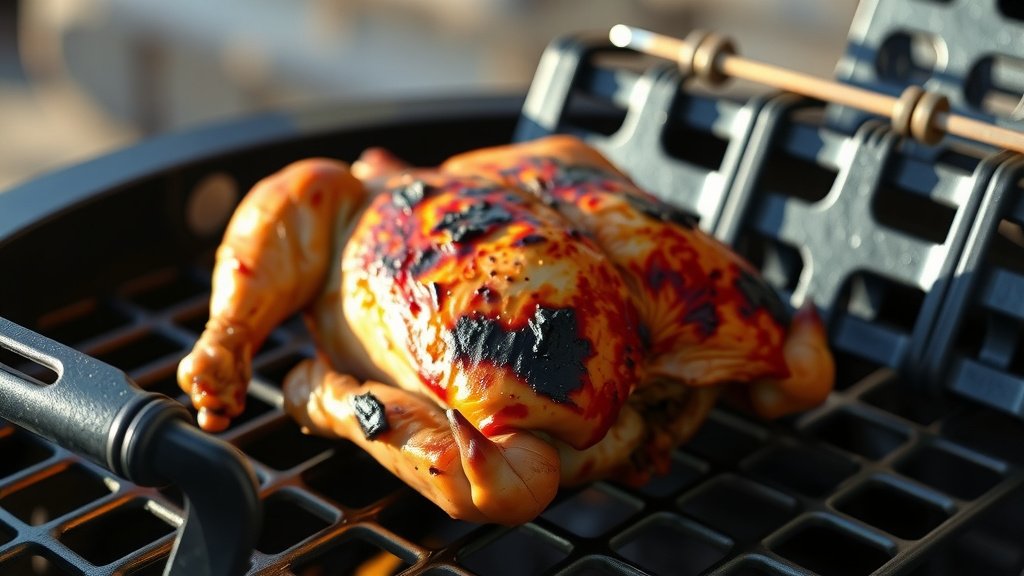
To charcoal grill chicken successfully, you need to master a two-zone fire: one side for high, direct heat to sear, and another for lower, indirect heat to cook through gently. Always aim for an internal temperature of 165°F (74°C) for safe, juicy chicken.
Achieving perfectly cooked charcoal grill chicken means starting with good prep, managing your grill temperature, and knowing when to use direct or indirect heat. This approach ensures crispy skin and tender, moist meat every time.
Here’s a quick rundown of what you will learn about charcoal grilling chicken:
- Discover why charcoal offers unique flavors for chicken.
- Learn how to choose and prepare the best chicken cuts.
- Understand how to set up your grill with a two-zone fire.
- Master the art of temperature control for juicy results.
- Find out how to tell when your chicken is perfectly cooked.
How To Charcoal Grill Chicken?
Charcoal grilling chicken involves creating a two-zone fire to manage heat effectively, allowing you to sear for flavor and cook slowly for tenderness. This method gives you ultimate control and delicious results.
Why Charcoal Grilling Wins for Chicken Flavor
When you grill chicken with charcoal, you get a unique smoky flavor that gas grills just can’t replicate. The charcoal briquettes or lump wood infuse your food with a depth that is truly special. Many experts say this authentic taste makes the extra effort worthwhile.
The heat from charcoal is also very intense, which helps to create a beautiful, crispy skin on your chicken. This intense heat sears the surface quickly, locking in juices and developing a rich, caramelized crust.
Picking the Best Chicken for Your Grill
Selecting the right chicken cut is the first step to a great meal. Whole chickens, bone-in thighs, drumsticks, and breasts all work well, but they require slightly different approaches. Bone-in pieces cook more evenly and stay juicier.
For beginners, bone-in, skin-on chicken thighs or drumsticks are very forgiving. They tolerate a wider range of temperatures and are less likely to dry out than boneless, skinless breasts. Look for chicken that is plump and fresh-looking.
Preparing Your Chicken for Grilling Glory
Proper preparation makes a huge difference in the final taste and texture of your charcoal-grilled chicken. Start by patting your chicken pieces completely dry with paper towels. Dry skin crisps up better.
Consider a simple brine for juicier chicken, especially breasts. A basic brine involves salt, sugar, and water, letting the chicken soak for a few hours. This step helps the chicken retain moisture and makes it more flavorful and tender (USDA).
Seasoning is key! A good rub or marinade adds layers of flavor. Apply your chosen seasoning generously, ensuring all surfaces are covered. Many chefs suggest letting the seasoned chicken sit for at least 30 minutes, or even overnight, in the fridge for flavors to meld.
Essential Chicken Prep Checklist
- Pat chicken dry with paper towels.
- Trim excess fat or skin, but leave some for flavor.
- Brine chicken for 2-4 hours if desired.
- Apply your favorite dry rub or marinade evenly.
- Let chicken rest at room temperature for 15-30 minutes before grilling.
Setting Up Your Charcoal Grill: The Two-Zone Fire
A two-zone fire is the secret weapon for grilling chicken on charcoal. This setup means piling charcoal on one side of the grill for direct, high heat, and leaving the other side empty for indirect, lower heat. This allows you to move the chicken as needed, avoiding burnt outsides and raw insides. Think of it as having a “hot seat” and a “rest stop” on your grill.
To create it, light your charcoal in a chimney starter until it’s glowing orange. Then, carefully pour the hot coals onto one side of your grill, spreading them into an even layer. This creates your direct-heat zone.
Leave the other side of the grill grate free of coals. This becomes your indirect-heat zone. Now, put the cooking grates back on and close the lid for about 10-15 minutes to let the grill heat up properly and for the grates to get hot.
Mastering Grill Temperature for Perfect Chicken
Temperature control is absolutely vital when grilling chicken. For most chicken cuts, you want a medium-high direct heat (around 400-450°F or 200-230°C) for searing and a medium indirect heat (around 325-375°F or 160-190°C) for cooking through. Many experts recommend using a reliable grill thermometer to monitor your temperatures accurately, as guessing can lead to uneven results. Adjust the air vents to control the heat: more open vents mean hotter fire, and more closed vents mean a cooler fire. You can also move coals around slightly to fine-tune your zones.
Grilling Times and Temperatures for Common Chicken Cuts
| Chicken Cut | Approx. Grill Time | Internal Temp. Goal |
|---|---|---|
| Bone-in Thighs | 30-40 minutes | 165-175°F (74-79°C) |
| Drumsticks | 25-35 minutes | 165-175°F (74-79°C) |
| Bone-in Breasts | 35-45 minutes | 165°F (74°C) |
| Boneless Breasts | 15-25 minutes | 165°F (74°C) |
| Whole Chicken (spatchcocked) | 45-60 minutes | 165°F (74°C) |
The Art of Direct and Indirect Grilling
Start your chicken over the direct heat zone to get that beautiful sear and crispy skin. Place chicken skin-side down over the hot coals for 3-5 minutes per side. Watch carefully to prevent burning. We found this initial sear creates incredible flavor and texture.
Once you have a nice sear, move the chicken to the indirect heat zone. Close the lid and let it cook gently. This is where the magic happens, allowing the chicken to cook through without burning the outside. Flip occasionally, about every 10-15 minutes, until your chicken reaches the safe internal temperature. Think of this as the “slow roast” phase on your grill, ensuring tender, juicy results.
Knowing When Your Chicken is Done
The most accurate way to tell if your chicken is cooked is by using an instant-read meat thermometer. Insert the thermometer into the thickest part of the meat, avoiding bones. Chicken is safe to eat when it reaches an internal temperature of 165°F (74°C) (CDC). Many experts say reaching this temperature ensures food safety while maintaining optimal juiciness, especially if you remove it slightly earlier and let carryover cooking finish the job.
Once the chicken reaches temperature, take it off the grill and let it rest for 5-10 minutes. This resting period allows the juices to redistribute throughout the meat, making it incredibly tender and moist. Patience is a virtue here!
Troubleshooting Common Charcoal Grilling Challenges
Is your chicken burning on the outside but raw inside? You likely have too much direct heat, or your pieces are too thick for the initial sear. Move them to the indirect zone sooner. Is your chicken dry? You might have overcooked it or cooked it at too high a temperature for too long. Next time, aim for that 165°F target and remove it promptly. We found that practice truly makes perfect when it comes to managing a charcoal grill.
Safety First: Grilling Guidelines
Always use separate cutting boards and utensils for raw chicken to prevent cross-contamination. Wash your hands thoroughly before and after handling raw meat. Keep your grill clean to prevent flare-ups and ensure even cooking. These simple steps keep you and your guests safe (FDA).
Conclusion
Charcoal grilling chicken is a rewarding experience that produces incredibly flavorful, juicy results. By understanding how to set up a two-zone fire, control your grill temperature, and use a meat thermometer, you can achieve perfect chicken every time. It takes a little practice, but the smoky aroma and delicious taste are truly worth the effort. So, grab your tongs, light your coals, and enjoy the journey to becoming a charcoal chicken master!
Frequently Asked Questions
Can I grill frozen chicken on a charcoal grill?
No, it’s not recommended to grill frozen chicken directly on a charcoal grill. Frozen chicken cooks unevenly, leading to dry outsides and undercooked insides. Always thaw chicken completely in the refrigerator before grilling to ensure safe and even cooking.
What kind of charcoal is best for grilling chicken?
Both lump charcoal and briquettes work well for grilling chicken. Lump charcoal burns hotter and cleaner, imparting a more natural smoky flavor. Briquettes offer a more consistent, longer-lasting heat, which can be easier for beginners to manage. Many grill masters combine both for a balanced approach.
How do I prevent chicken skin from sticking to the grill grates?
To prevent sticking, ensure your grill grates are very clean and well-oiled before placing the chicken. Heat your grates for 10-15 minutes, then scrub them with a wire brush. Apply a high-smoke-point oil to the grates using a paper towel dipped in oil and held by tongs. Also, don’t try to move the chicken too soon; let it sear for a few minutes to naturally release.
Should I brine chicken before grilling?
Brining chicken before grilling is a great way to ensure a juicier, more flavorful result, especially for leaner cuts like chicken breasts. While not strictly necessary for every cut, we found that even a simple salt-water brine can dramatically improve the chicken’s moisture content and tenderness. It’s an extra step that often pays off significantly.
How do I add more smoky flavor to my charcoal-grilled chicken?
To enhance the smoky flavor, add wood chunks or chips to your charcoal fire. Soak wood chips for about 30 minutes before adding them directly to the hot coals for a short burst of smoke. For longer smokes, use dry wood chunks. Popular choices include apple, cherry, or hickory wood, which pair beautifully with chicken.
