
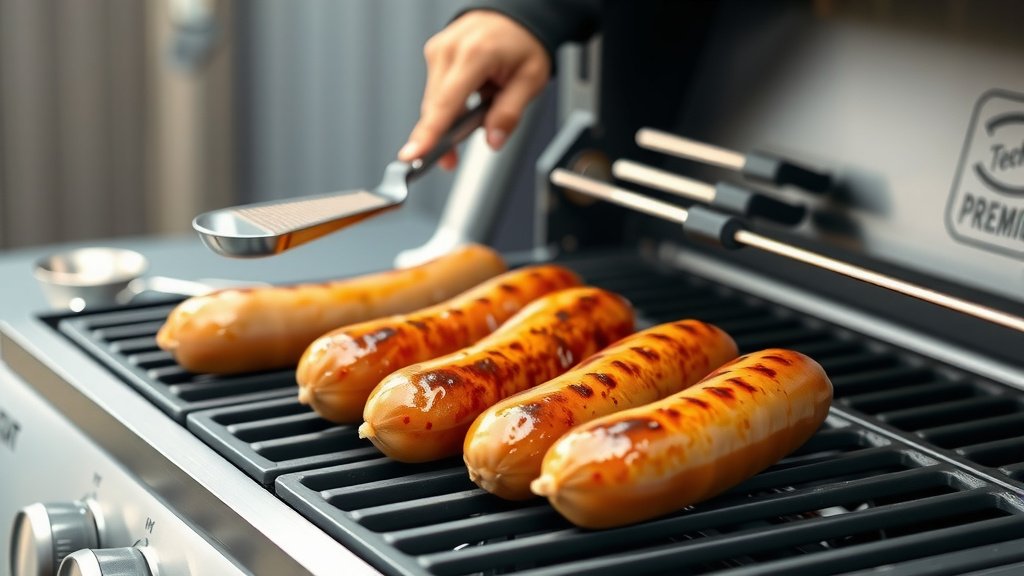
To gas grill brats perfectly, begin by preheating your grill to a medium-low temperature, around 300-325°F (150-160°C), using indirect heat to cook them through gently. This method prevents bursting and ensures even doneness.
Once cooked internally, move the brats over direct, medium-high heat for a few minutes on each side to achieve a beautiful, crispy, and flavorful exterior.
- Preheat your gas grill to medium-low for gentle, indirect cooking.
- Cook brats indirectly first for even internal temperature without bursting.
- Finish with a quick sear over direct heat for golden-brown deliciousness.
- Always use a meat thermometer to ensure brats reach 160°F (71°C).
- Rest your brats for a few minutes after grilling to lock in the juices.
How To Gas Grill Brats?
Achieving perfectly grilled brats on a gas grill involves initial indirect cooking for even heating, followed by a brief sear for a delicious char. This two-zone method is your best ally.
Gather Your Gear: What You’ll Need
Before you light up the grill, it’s smart to have everything ready. Think of it as your grilling mission control. You’ll need tongs, a meat thermometer, and a grill brush.
Having these tools close by keeps your focus on the brats, not a frantic search. Many experts suggest a clean grill grate for better results (USDA).
Choosing the Right Brats: Fresh or Pre-Cooked?
When selecting brats, you often find two main types: raw and pre-cooked. Raw brats usually offer a more intense flavor. They need careful cooking to reach a safe internal temperature.
Pre-cooked brats are a bit more forgiving. They just need reheating and a good sear. We find that for authentic flavor, many grill masters prefer raw brats.
Preparing Your Grill: Setting Up Two Zones
This step is where the magic starts. You’ll want to create two distinct heat zones on your gas grill. Turn one or two burners to medium-low, and leave one burner off.
This off-burner area will be your indirect cooking zone. The active burners create your direct heat zone for searing later. This setup is a game-changer for brats.
Preheating for Success
Light your burners and close the lid. Let your grill preheat for 10-15 minutes. Aim for a temperature of about 300-325°F (150-160°C) in the indirect zone.
A properly preheated grill ensures consistent cooking. Research shows that inconsistent grill temperatures can cause uneven cooking (Food Safety News).
The Indirect Cook: Gentle Perfection
Now, place your raw brats over the indirect heat zone. That means placing them on the grate above the unlit burner. Close the lid and let them cook.
This gentle heat helps the brats cook through without burning the outside. It also helps render some of the fat, making them less prone to bursting.
How Long for the Indirect Cook?
Plan for about 15-20 minutes during this indirect phase. Flip them occasionally, every 5-7 minutes, to ensure all sides cook evenly. Keep that lid closed to maintain temperature.
Opening the lid too often releases heat and slows down cooking. Think of it like baking; consistency matters.
Checking for Doneness: Temperature is Key
This is arguably the most important step for food safety and flavor. Use a reliable meat thermometer to check the internal temperature of your brats.
Many guidelines point to 160°F (71°C) as the safe internal temperature for pork brats (USDA).
| Brat Cooking Stage | Temperature (Approx.) | Action |
|---|---|---|
| Grill Preheat (Indirect Zone) | 300-325°F (150-160°C) | Set up indirect heat. |
| Internal Temp (Indirect Cook) | 150-155°F (65-68°C) | Brats are almost ready for searing. |
| Final Internal Temp (Sear) | 160°F (71°C) | Safe and ready to eat! |
The Searing Stage: Crispy and Flavorful
Once your brats reach around 150-155°F (65-68°C) internally, it’s time for the grand finale. Move them over to the direct heat zone. This is where you develop that beautiful crust.
Sear for 2-3 minutes per side, turning with tongs. Watch them closely; direct heat can quickly go from golden-brown to charred. You want a nice caramelization, not a burn.
Resting Your Brats: Don’t Skip This Step!
Just like a good steak, brats benefit from a short rest. Transfer them to a clean platter or cutting board. Cover loosely with foil for 5 minutes.
This resting period allows the juices to redistribute throughout the brat, leading to a more flavorful and moist bite. It’s a tiny step with a big payoff.
Serving Suggestions: The Classic Pairings
What goes best with a perfectly grilled brat? Classic choices include a toasted bun, sauerkraut, and a variety of mustards. Think about fresh onions, too.
Don’t be afraid to try some gourmet toppings like caramelized onions or peppers. A cold beverage is a must, wouldn’t you agree?
Common Mistakes to Avoid
We’ve all been there, making a grilling error or two. The most common brat mistake is cooking them solely over direct high heat. This often leads to burnt exteriors and raw centers.
Another pitfall is poking or slicing the brats during cooking. This lets out all those delicious juices, resulting in a dry brat. So, resist the urge to poke!
The Perils of High Heat
Cooking brats on high, direct heat from the start often causes them to burst. When they burst, the fat drips onto the flames, creating flare-ups. This can make your brats taste smoky, but also very greasy and unevenly cooked.
Controlling the heat is central to grilling success. Many chefs say mastering heat control is the first rule of grilling.
Your Brat Grilling Checklist
- Choose your brats (raw for best flavor!).
- Gather your grilling tools (tongs, thermometer, brush).
- Set up two heat zones on your gas grill.
- Preheat grill to 300-325°F (indirect zone).
- Cook brats indirectly, flipping often, until 150-155°F.
- Sear over direct heat for 2-3 minutes per side.
- Check for 160°F internal temperature.
- Rest brats for 5 minutes before serving.
Conclusion
Grilling brats on a gas grill is a straightforward process when you know the steps. By using a two-zone cooking method—starting with indirect heat and finishing with a sear—you ensure tender, juicy brats with a perfectly browned exterior. Remember to use your meat thermometer; it’s your best friend for safety and quality.
Now, go fire up that grill! You’re ready to impress with perfectly cooked brats every time. Enjoy the sizzle and the taste of summer.
How do I prevent brats from bursting on the grill?
To prevent brats from bursting, cook them over indirect heat for the majority of the cooking time. This gentle heat allows them to cook through slowly without the skin splitting. Avoid pricking them with a fork, as this also releases juices and can cause bursting.
Should I boil brats before grilling them?
While some people par-boil brats in beer or water before grilling, it’s not strictly necessary, especially with the two-zone grilling method. Boiling can sometimes dilute the flavor. Grilling them directly with indirect heat followed by searing often produces superior flavor and texture.
What is the ideal internal temperature for grilled brats?
The ideal and safe internal temperature for fully cooked pork brats is 160°F (71°C). Always use a reliable meat thermometer inserted into the thickest part of the brat to confirm doneness.
How do I get a good sear on my brats without overcooking them?
Achieve a good sear by moving your brats from the indirect heat zone to a direct, medium-high heat zone only after they’ve mostly cooked through internally (around 150-155°F). Sear for just 2-3 minutes per side, watching closely to prevent burning, then remove them immediately.
Can I grill frozen brats?
It’s always best to thaw brats completely before grilling them. Grilling frozen brats can lead to uneven cooking, where the outside cooks too quickly while the inside remains undercooked. Thawing ensures a more consistent and safer result.
