
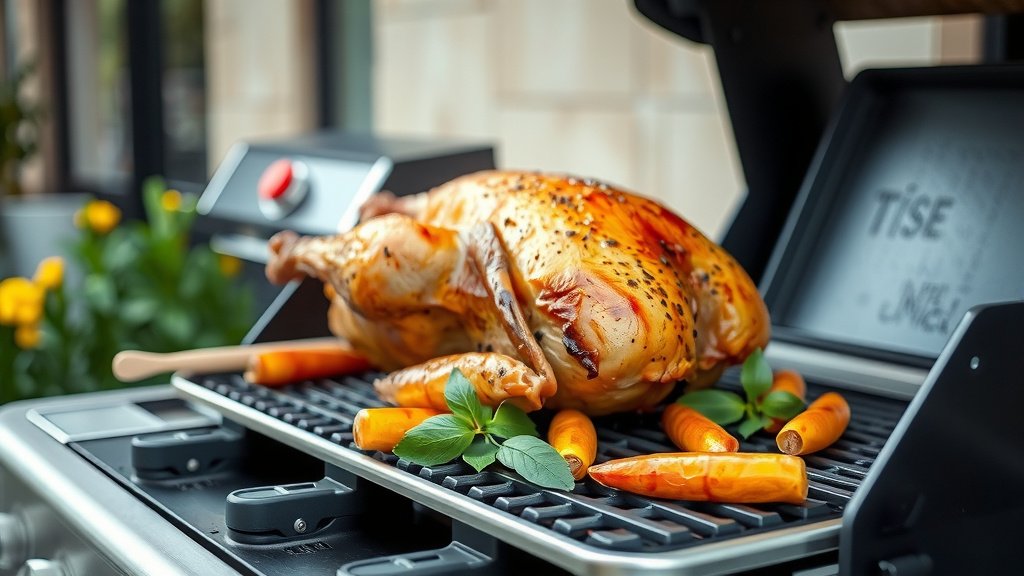
To gas grill a turkey, you will typically use a two-zone indirect heating method, where the bird cooks slowly on the unlit side of the grill while burners on the other side provide the heat.
Aim for a consistent grill temperature between 325-350°F (160-175°C) and cook until the turkey’s internal temperature reaches 165°F (74°C) in the thickest part of the thigh, away from the bone.
Here’s a quick look at what you’ll learn about gas grilling a turkey:
- Mastering the two-zone grilling method for perfect results.
- How to properly prepare your turkey for the grill, from thawing to seasoning.
- Achieving juicy meat and crispy, golden skin every time.
- Monitoring internal temperatures for safe and delicious eating.
- Tips for avoiding common grilling pitfalls and ensuring a stress-free experience.
How To Gas Grill A Turkey?
You gas grill a turkey using a two-zone cooking method: one side of your grill is lit for heat, and the other remains unlit where your turkey cooks slowly.
This approach gives you that perfectly golden skin and wonderfully moist meat without burning, creating a holiday centerpiece you’ll be proud of.
Why Gas Grill a Turkey?
Many folks often wonder if a gas grill can truly handle a Thanksgiving turkey. The answer is a resounding yes!
Grilling offers a unique flavor and keeps your kitchen cool, especially during big holiday meals. It’s a fantastic alternative to traditional oven roasting.
Extra Juicy Results
Grilling helps lock in moisture, often leading to a turkey that is incredibly juicy from breast to thigh. The constant circulation of heat on a grill can create a beautiful, even cook throughout.
Research suggests that cooking methods using indirect heat often retain more moisture in poultry (USDA).
Your Oven Stays Free
Imagine your oven completely free for all those delicious side dishes! This is a big win for holiday meal prep.
When you grill your turkey, you reduce kitchen congestion and make meal coordination much simpler.
Selecting the Right Turkey
Choosing the correct turkey is your first step toward grilling success. Think about size and what fits your grill.
A fresh turkey often has a slightly better flavor profile, but a frozen one works just as well if thawed correctly.
Size Up Your Grill Space
Most gas grills can comfortably fit a turkey up to 15-18 pounds. Larger birds might touch the grates or lid, causing uneven cooking.
Make sure you have enough clearance for the turkey and any roasting pan you might use, ensuring good airflow for even heat.
Essential Prep Steps
Proper preparation makes all the difference for a fantastic grilled turkey. Don’t skip these critical steps.
From thawing to seasoning, each part helps you build up to a delicious final product.
Thawing Safely
A frozen turkey needs to be fully thawed before grilling. This is non-negotiable for food safety and even cooking.
Many experts recommend thawing in the refrigerator, allowing about 24 hours for every 4-5 pounds of turkey (USDA).
Here’s a quick checklist for thawing your turkey:
- Ensure you have enough refrigerator space.
- Place the turkey in a pan to catch any drips and prevent cross-contamination.
- Start thawing several days before your grill day.
- Once thawed, cook within one to two days.
- Never thaw at room temperature; this can promote bacterial growth.
Brine or Rub? You Decide!
Brining helps create a moist turkey by infusing it with seasoned liquid. Dry rubs, on the other hand, focus on creating a flavorful crust.
Both methods will enhance the turkey’s flavor, so pick what sounds most appealing to you.
- For Brining: You might need a large container, water, salt, sugar, and aromatics like herbs or citrus.
- For Rubbing: Combine herbs, spices, salt, and pepper. You can also mix with butter or oil for better adhesion.
Setting Up Your Gas Grill
The right grill setup is paramount for success when cooking a turkey. It’s all about creating those perfect heat zones.
You want to mimic an oven environment, but with that distinct grilled flavor.
Creating Indirect Heat Zones
To set up for indirect heat, turn on the burners on one side of your grill to medium. Keep the burners directly under where the turkey will sit turned off.
The goal is a consistent grill temperature of 325-350°F (160-175°C), which you can monitor with your grill’s lid thermometer or an external probe.
The Gas Grilling Method
Now for the main event! Placing your turkey correctly and monitoring it are crucial steps.
This method prevents direct flame contact, giving you a slow, even roast.
Place your prepared turkey, breast-side up, in a sturdy roasting pan or directly on the unlit side of the grates. Close the lid.
You’ll need to rotate the turkey or the pan every 1-1.5 hours to ensure even cooking and a beautiful golden-brown skin.
Many people find these estimated cooking times helpful for planning:
| Turkey Weight (Pounds) | Approximate Grilling Time (Hours) |
|---|---|
| 10-12 | 2.5 – 3 |
| 12-14 | 3 – 3.5 |
| 14-16 | 3.5 – 4 |
| 16-18 | 4 – 4.5 |
Monitoring Temperature and Doneness
The only reliable way to know if your turkey is done is with a meat thermometer. Visual cues alone can be misleading.
Insert the thermometer into the thickest part of the thigh, avoiding the bone, until it reads a safe 165°F (74°C) (FDA).
Resting Your Masterpiece
Once your turkey reaches the target temperature, remove it from the grill. Do not slice into it immediately!
Allowing the turkey to rest, loosely tented with foil, for 20-30 minutes helps the juices redistribute, resulting in a tender, more flavorful bird.
Common Grilling Challenges
Even with careful planning, things can sometimes go sideways. Don’t worry, there are ways to handle common issues.
Being prepared for these can save your meal and reduce any stress.
If your grill temperature fluctuates too much, adjust the lit burners slightly. For flare-ups from dripping fat, move the turkey away from the flames temporarily.
A good meat thermometer will also help prevent undercooking or drying out the meat.
Conclusion
Grilling a turkey on a gas grill can be a fun and rewarding experience, offering juicy results and freeing up your kitchen oven. By understanding indirect heat, proper preparation, and careful temperature monitoring, you can achieve a delicious turkey that everyone will rave about.
Don’t be afraid to experiment with brines and rubs to find your perfect flavor. Your gas grill is more than capable of delivering a memorable holiday meal, giving you that wonderful smoky flavor many love.
Can I smoke a turkey on a gas grill?
Yes, you can certainly add a smoky flavor to your gas-grilled turkey! Place wood chips (soaked in water for 30 minutes) in a foil packet or a smoker box directly over one of the lit burners. This creates smoke to infuse your turkey as it cooks indirectly.
How long does it take to gas grill a 12-pound turkey?
For a 12-pound turkey, you can expect the grilling time to be approximately 2.5 to 3 hours. Always use a meat thermometer to confirm doneness; the thickest part of the thigh should read 165°F (74°C).
Should I use a roasting pan or directly on the grates?
While you can place the turkey directly on the grates, using a sturdy roasting pan with a rack is often recommended. A pan collects flavorful drippings for gravy and helps prevent the turkey skin from burning on the bottom, ensuring easier handling.
What are common mistakes to avoid when gas grilling turkey?
Avoid these common mistakes: not fully thawing the turkey, cooking with direct heat that burns the skin, not using a meat thermometer, and forgetting to let the turkey rest after cooking. These can lead to an undercooked, dry, or unevenly cooked bird.
Is it safe to stuff a turkey cooked on a gas grill?
Many food safety experts advise against stuffing any turkey, whether grilled or roasted, because the stuffing often doesn’t reach a safe internal temperature of 165°F (74°C) as quickly as the turkey itself (Mayo Clinic). Cook stuffing separately for best safety.
