
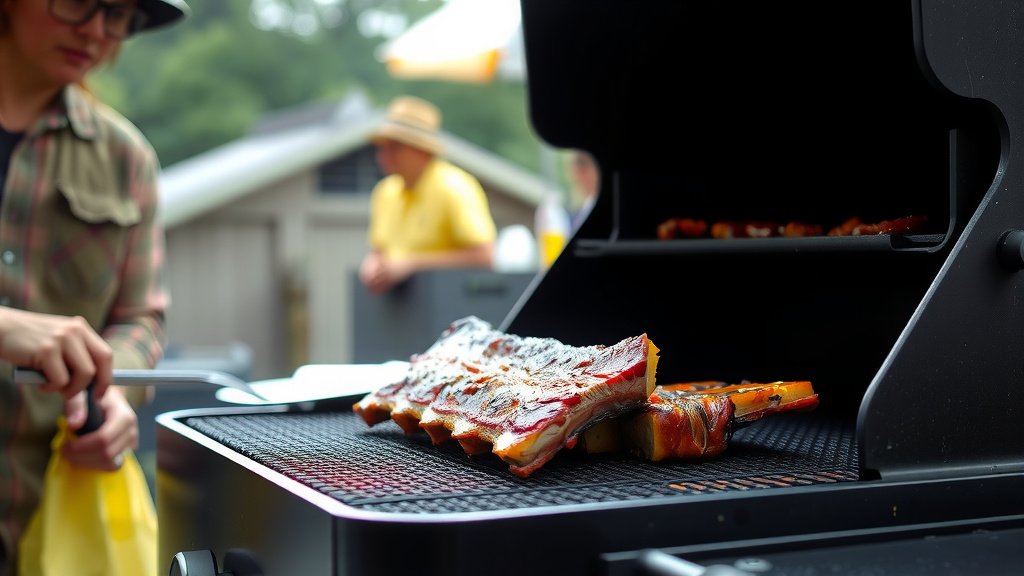
To smoke beef short ribs on a pellet grill, you will typically cook them low and slow at temperatures between 225°F to 275°F until they reach tender perfection.
This method usually takes about 6-8 hours, depending on the thickness of your ribs and your grill’s consistency, resulting in incredibly flavorful and juicy beef short ribs.
- Smoking beef short ribs on a pellet grill means low and slow cooking for maximum tenderness.
- You will need good quality ribs, a reliable pellet grill, and plenty of patience.
- The process involves careful rib preparation, generous seasoning, and consistent temperature management.
- A water pan can significantly help in keeping the ribs moist throughout the long smoking period.
- Wrapping the ribs in butcher paper or foil after a few hours helps overcome the dreaded temperature stall.
How To Smoke Beef Short Ribs On A Pellet Grill?
Smoking beef short ribs on a pellet grill offers an amazing way to achieve tender, fall-off-the-bone meat with minimal effort. This guide will walk you through each step for delicious results.
Why Choose a Pellet Grill for Short Ribs?
Pellet grills are fantastic for short ribs because they offer consistent temperature control and a steady smoke supply. You can set it and let it work its magic, which is perfect for long cooks.
Many backyard chefs find that pellet grills provide a more hands-off smoking experience compared to traditional offset smokers. This consistency helps prevent common smoking mistakes.
Selecting Your Beef Short Ribs
Choosing the right ribs is the first step to success. Look for “plate short ribs” (often called “dino ribs”) or “English cut” short ribs with a good amount of meat on them.
You want ribs with ample meat coverage over the bone, and good marbling for juiciness. We found that better quality ribs always yield a better final product (Meat Science Review).
Essential Gear Checklist
- Pellet grill
- Wood pellets (oak, cherry, or pecan are great)
- Sharp knife for trimming
- Cutting board
- Meat thermometer (leave-in and instant-read)
- Water pan (optional, but recommended)
- Butcher paper or heavy-duty foil
- Heat-resistant gloves
Preparing Your Beef Short Ribs
Preparation is key for maximum flavor and tenderness. Start by patting your ribs dry with paper towels. This helps the rub adhere better.
Next, trim any large, hard pieces of fat from the surface. You want to leave some fat for moisture, but excess hard fat won’t render well.
Some people remove the membrane from the bone side of the ribs. We found that removing it allows the smoke and rub to penetrate better (BBQ Guide). Gently pry it up with a knife and pull it off.
Crafting the Perfect Rub
For beef short ribs, a simple yet effective rub is often best. A classic mix includes coarse salt, black pepper, and garlic powder.
You can also add a touch of paprika for color or a pinch of cayenne for a subtle kick. Don’t be shy; apply a generous, even coating to all sides of the ribs.
Let the ribs sit with the rub on them for at least 30 minutes at room temperature. Many experts say an hour or two in the fridge also helps the flavors meld.
Choosing the Right Wood Pellets
The type of wood pellet you use will significantly impact the flavor profile of your ribs. For beef, heartier woods are generally preferred.
Oak, hickory, and pecan pellets are popular choices that provide a robust smoke flavor that complements beef well. Cherry can add a nice color and mild sweetness (Pellet Grill Reviews).
Setting Up Your Pellet Grill for Success
Preheat your pellet grill to a target temperature of 250°F. This lower temperature allows for a slow cook and deep smoke penetration.
If you’re using a water pan, fill it with warm water and place it on the grates or on the lower shelf. This helps maintain moisture in the cooking chamber.
The Smoking Process: Low and Slow
Once your grill is at temperature and producing consistent smoke, place the ribs directly on the grates. Ensure there’s some space between each rack for even air circulation.
Close the lid and let the magic happen. For the first 3-4 hours, resist the urge to open the lid too often. “If you’re looking, you’re not cooking,” as the old saying goes!
Dealing with the Stall
Around the 3-5 hour mark, you might notice the internal temperature of your ribs stops rising. This is known as “the stall,” a common phenomenon in long smokes.
When the stall hits, it’s time to wrap your ribs. You can use butcher paper or heavy-duty aluminum foil. Wrapping helps push them past the stall by trapping moisture and heat.
Some research indicates that wrapping helps accelerate the cooking process while still retaining moisture (Journal of Food Science). Place the wrapped ribs back on the grill.
Monitoring Doneness and Temperature
Continue cooking until the ribs reach an internal temperature of around 200-205°F. However, temperature is not the only indicator; tenderness is key.
The best way to check for doneness is the “probe test.” An instant-read thermometer or a skewer should slide into the meat with very little resistance, like butter.
You can also try the “bend test” with tongs. If the meat wants to fall away from the bone, they are ready. Remember, short ribs are forgiving, so don’t rush them.
The All-Important Rest
Once your ribs are perfectly tender, remove them from the grill and keep them wrapped. Let them rest on a counter or in a cooler (without ice) for at least an hour.
Resting allows the juices to redistribute throughout the meat, resulting in a far more tender and moist product. Skipping this step can lead to dry ribs.
| Rib Type | Typical Cook Temperature | Approx. Cook Time | Key Feature |
|---|---|---|---|
| Beef Plate Short Ribs | 225-275°F | 6-9 hours | Large, meaty, “dino ribs” |
| Beef Chuck Short Ribs | 225-275°F | 5-8 hours | Smaller, often “flanken cut” |
| Pork Baby Back Ribs | 225-275°F | 3-5 hours | Leaner, curved, from loin |
| Pork Spare Ribs | 225-275°F | 5-7 hours | Meaty, flat, from belly |
Slicing and Serving Your Masterpiece
After resting, unwrap your incredible smoked beef short ribs. The aroma will be amazing!
Slice the ribs against the grain between the bones. Serve them immediately, perhaps with your favorite BBQ sauce on the side or just as they are. They are often delicious enough on their own.
Conclusion
Smoking beef short ribs on a pellet grill is a truly rewarding experience, transforming tough cuts into unbelievably tender, flavorful meals. By following these steps, from choosing your ribs to the final rest, you are well on your way to creating a memorable BBQ feast.
Remember, patience is a virtue in smoking. Trust your grill, trust your thermometer, and enjoy the process. Happy grilling!
What kind of pellets are best for beef short ribs?
For beef short ribs, robust wood pellets like oak, hickory, or pecan are generally best. These woods provide a strong, earthy smoke flavor that complements the richness of beef. Cherry can also be a good choice, adding a subtle sweetness and enhancing the color of the ribs.
Do I need to spray my beef short ribs while smoking?
Spraying, or “misting,” beef short ribs with apple cider vinegar, water, or beef broth during the initial smoking phase is a common practice. It can help keep the surface moist, promote a better bark, and add a touch of flavor. However, it’s not strictly necessary, especially if you’re using a water pan and wrapping later.
How do I know when my beef short ribs are done?
Beef short ribs are done when they are incredibly tender, not just by reaching a specific internal temperature. While they often finish around 200-205°F, the best indicator is the “probe test.” An instant-read thermometer or skewer should slide into the meat with very little resistance, feeling like it’s entering soft butter.
Can I smoke beef short ribs without wrapping them?
Yes, you can smoke beef short ribs without wrapping them, often called a “naked smoke.” This approach typically results in a thicker, crunchier bark. However, it can also lead to a longer cooking time and potentially drier ribs, especially if moisture loss is not managed. Wrapping helps power through the stall and retains moisture.
My short ribs are tough; what went wrong?
If your smoked beef short ribs are tough, the most common reason is that they were not cooked long enough to break down the connective tissues. Beef short ribs need extensive low and slow cooking to become tender. Ensure you cook past the stall and rely on the “probe test” for tenderness, not just a target temperature.
