
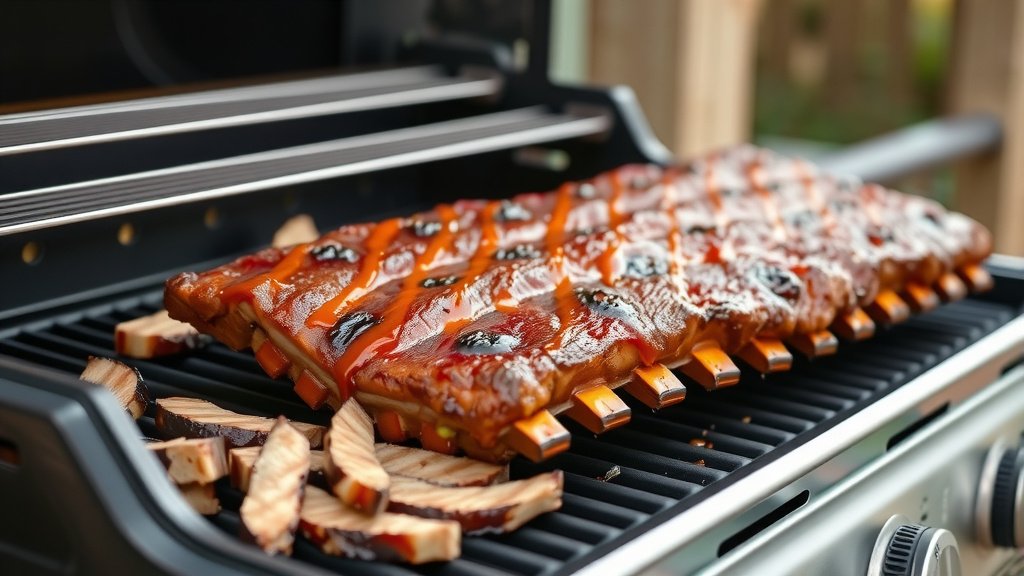
Making ribs on a propane grill involves setting up your grill for indirect heat, maintaining a consistent low temperature, and often using a ‘3-2-1’ cooking method for incredibly tender results.
You can achieve fall-off-the-bone deliciousness on your propane grill by carefully managing heat zones, applying a flavorful dry rub, and finishing with your favorite sauce.
- Get ready to master your propane grill for amazing ribs.
- The secret lies in controlling temperature and using indirect heat.
- You’ll apply a savory dry rub, cook slowly, and finish with a tasty sauce.
- Patience is your best friend when grilling ribs to perfection.
- Enjoy succulent ribs right in your own backyard!
How To Make Ribs On A Propane Grill?
Crafting tender, flavorful ribs on a propane grill is certainly possible. It just requires understanding how to use your grill’s heat to your benefit.
Why Choose Propane for Ribs?
Propane grills offer excellent temperature control, which is essential for slow-cooked items like ribs. You can easily adjust the flame to hold a steady low temperature.
This consistency helps you avoid burning the outside while the inside stays tough. It makes the grilling process less stressful for you.
Picking the Perfect Ribs
Your journey to amazing ribs starts at the butcher or grocery store. Different types of ribs offer distinct textures and meatiness.
Baby Back Ribs vs. Spare Ribs
Baby back ribs are smaller, leaner, and cook faster. Many people appreciate their tender meat. Spare ribs are larger, meatier, and have more fat, which often translates to more flavor and moisture (USDA).
Consider what you prefer: a quicker cook with leaner meat or a longer cook for richer, more robust flavor.
Prepping Your Ribs: The First Step
Good preparation sets the stage for great ribs. Don’t skip these simple but impactful steps.
Removing the Membrane
On the bone-side of your ribs, there’s a thin, tough membrane. This membrane does not break down during cooking and can make your ribs chewy. We found that removing it helps the ribs become much more tender.
Just slide a knife under one edge, grab it with a paper towel for grip, and pull it off. It often comes off in one easy piece.
Crafting Your Dry Rub
A great dry rub is the foundation of flavor for your ribs. It adds a delicious crust and infuses the meat with spices.
You can buy pre-made rubs, or mix your own. Many experts say a good rub often includes salt, sugar (brown sugar is common), paprika, garlic powder, onion powder, and a touch of cayenne for warmth.
Apply the rub generously to all sides of the ribs. Rub it in gently, letting it adhere. You can do this a few hours or even the night before cooking for deeper flavor penetration.
Setting Up Your Propane Grill for Ribs
This is where your propane grill shines. You’ll need to create a two-zone cooking environment.
Mastering Two-Zone Cooking
Two-zone cooking means having a hot side and a cool side on your grill. You achieve this by turning on some burners to medium-low and leaving others off. For ribs, you want the ribs to cook indirectly over the burners that are off.
Aim for an internal grill temperature around 225-250°F (107-121°C). This low, slow heat is what breaks down the tough connective tissues in the ribs, making them tender.
Adding a Hint of Smoke
While not a traditional smoker, your propane grill can still add a smoky flavor. We found that placing wood chips (soaked in water for 30 minutes) in a foil packet with holes, or a smoker box, directly over a lit burner will create smoke.
Place this packet on the hot side of your grill. The smoke will circulate and lightly flavor your ribs as they cook on the cool side.
The “3-2-1” Method for Rib Perfection
The 3-2-1 method is a popular technique for spare ribs. It refers to hours spent in three different phases. For baby back ribs, a 2-2-1 method is often suitable due to their smaller size.
| Phase | Time (Spare Ribs) | Time (Baby Backs) | Activity |
|---|---|---|---|
| Phase 1: Smoke/Grill | 3 hours | 2 hours | Cook ribs unwrapped, bone-side down, indirect heat. Add smoke if desired. |
| Phase 2: Wrap | 2 hours | 2 hours | Wrap ribs tightly in foil with liquid (apple juice, broth), cook indirect. |
| Phase 3: Finish/Sauce | 1 hour | 1 hour | Unwrap, apply sauce (if desired), cook indirect until set. |
Phase 1: Smoking/Grilling Naked
Place your rubbed ribs bone-side down on the indirect heat side of your grill. Close the lid and let them cook for the suggested time. Maintain that 225-250°F temperature.
This phase develops a nice bark and allows the smoke to penetrate the meat.
Phase 2: The Foil Wrap
Carefully remove the ribs from the grill. Wrap each rack tightly in heavy-duty aluminum foil. You can add a splash of apple juice, cider vinegar, or broth to the foil packet (around 1/4 cup) to steam the ribs.
Return the wrapped ribs to the indirect heat for this phase. This step is where the magic happens, making them incredibly tender.
Phase 3: Saucing and Finishing
Unwrap the ribs and drain any liquid from the foil. Now is the time to apply your favorite barbecue sauce, if you like. Brush it on evenly.
Place the ribs back on the indirect heat. Cook for the final hour, allowing the sauce to caramelize and set. Keep an eye on the sauce to prevent burning.
Temperature Monitoring is Key
An accurate grill thermometer and an instant-read meat thermometer are your best friends. Don’t rely solely on the grill’s built-in gauge.
Many experts advise checking the ambient grill temperature frequently. For the ribs themselves, you’re looking for tenderness rather than a specific internal temperature. They will reach a high internal temperature during the long cook.
When Are Your Ribs Done?
You’ll know your ribs are ready when they pass the “bend test.” Pick up one end of a rack with tongs. If the rack bends significantly and the meat almost tears, they are done. Also, the meat should have pulled back from the ends of the bones.
Resting Your Ribs: Don’t Skip This!
Once cooked, transfer the ribs to a cutting board. Tent them loosely with foil and let them rest for 15-20 minutes. This allows the juices to redistribute throughout the meat, resulting in more moist and flavorful ribs.
Common Rib Grilling Mistakes to Avoid
We found that many common issues come from impatience or incorrect setup. Avoid cooking at too high a temperature, as this dries out the ribs. Also, do not open the grill lid too often; “if you’re lookin’, you ain’t cookin’.”
Not removing the membrane or skipping the rest period can also impact the final taste and texture. Follow the steps, and you’ll be fine.
Rib Grilling Checklist:
- Choose your preferred rib type.
- Remove the tough membrane.
- Apply a generous dry rub.
- Set up your grill for two-zone, indirect heat.
- Maintain a steady low temperature (225-250°F).
- Follow the 3-2-1 (or 2-2-1) cooking method.
- Monitor grill temperature closely.
- Apply sauce in the final phase.
- Rest your ribs before slicing.
Conclusion
Grilling ribs on a propane grill is certainly achievable and can yield outstanding results. By focusing on indirect heat, temperature control, and the “3-2-1” method, you can consistently produce tender, flavorful ribs.
Remember, patience and preparation are key. With these practical solutions, you’re well on your way to enjoying delicious, backyard-cooked ribs that will impress everyone.
Are baby back ribs cooked differently than spare ribs on a propane grill?
Yes, baby back ribs generally cook faster due to their smaller size and leaner meat. While the method is similar, you might use a “2-2-1” approach for baby backs instead of “3-2-1” to avoid overcooking them.
What is the best way to keep my propane grill at a low temperature for ribs?
To keep your propane grill at a low temperature, light only one or two burners on one side to medium-low, leaving the other burners off. Place the ribs over the unlit burners for indirect cooking. Adjust the lit burner(s) as needed to maintain 225-250°F.
Can I add smoke flavor to ribs on a propane grill?
Absolutely! You can add smoke flavor by placing pre-soaked wood chips in a foil packet with holes or a smoker box directly over a lit burner. This will generate smoke that circulates around your indirectly cooking ribs.
How do I know when my grilled ribs are done without an internal temperature?
Ribs are often judged by tenderness, not internal temperature. Use the “bend test”: pick up one end of a rack with tongs. If the rack bends significantly and the meat appears to almost tear, it’s a good sign they are tender and ready.
Is it necessary to wrap ribs in foil during cooking?
Wrapping ribs in foil, especially during the middle phase of cooking, is a widely recommended practice. This technique helps steam the ribs, trapping moisture and making them incredibly tender. It also helps speed up the cooking process slightly by getting past the “stall” period.
